Order ten sticks of satay in Kuala Lumpur and you already know three things before the first skewer hits the grill: how many sticks you actually want, which sauce style you trust, and whether you're loyal to Kajang or the city. Malaysia's most argued-over street food isn't hard to eat. It's easy to order badly, though — and even easier to judge it without actually knowing what you're tasting.
This is the practical version. No "best satay in KL" countdown, no recipe you'll never make on a Tuesday night. Just how satay actually works: what to order, what good versus bad looks like on the stick, and why an entire town forty minutes south of KL gets to call itself the capital of Malaysian satay.
Satay vs Sate: What You're Actually Ordering
"Satay" and "sate" are the same dish, spelled two ways. Sate is closer to the word's Indonesian and Malay-language roots; satay is the anglicised spelling used across Malaysia, Singapore and most English-language menus.
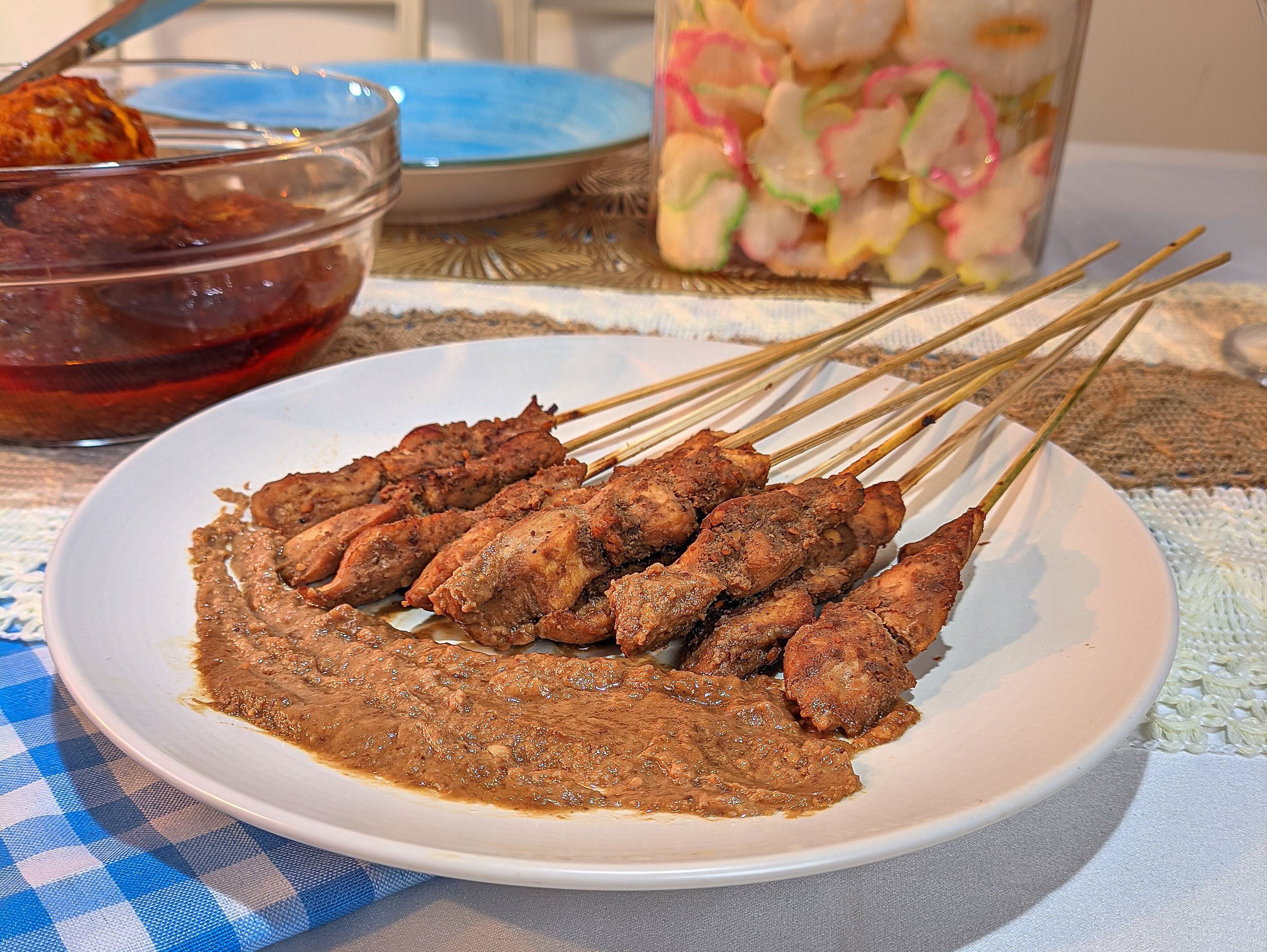
Either way, you're ordering small cuts of marinated meat, threaded onto skewers and grilled over charcoal, dipped into a peanut-based sauce.
Malaysian versions tend to lean sweeter and more herb-forward than their neighbours — turmeric, lemongrass and coriander in the marinade, then a sauce built on ground peanuts, tamarind, chilli and palm sugar (gula Melaka).
Every stall guards its own ratio like a state secret. That's half the fun of arguing about it, and half the reason satay never really gets old the way other street food trends do.
How to Order Satay Like You've Done This Before
Ordering isn't complicated, but there's an unwritten script, and getting it wrong just marks you out as a first-timer.
Order in batches, not singles
Nobody orders two sticks. Satay comes by the round — five, ten, fifteen — and you top up as you go rather than committing to a fixed total upfront. Under-ordering the first round is the rookie move; you'll just be back at the counter in four minutes, and the queue behind you knows it.
Know your proteins
Chicken and beef are the default order almost everywhere. Mutton (often labelled lamb) shows up on most menus too, usually gamier and fattier, which some regulars prefer specifically for that reason. Rarer cuts and offal versions exist at some stalls, but chicken, beef and mutton cover what you'll find at the vast majority of counters.
Don't skip the sides
Satay rarely arrives alone. Expect cubes of ketupat (rice compressed and boiled inside a woven palm-leaf pouch) or nasi impit (a simpler compressed-rice cousin, cut into blocks) alongside raw cucumber and onion.
The rice soaks up sauce; the cucumber and onion reset your palate between sticks so the fifth skewer tastes as good as the first. Skip either and you're eating half the dish.
Order the sauce, don't drown in it
A shared bowl of peanut sauce usually comes with the round, and most stalls will happily top it up if you ask. Dip, don't submerge — good satay should still taste like grilled meat, not just be a peanut-sauce delivery vehicle.
Most regulars eat with their hands, pulling the meat straight off the skewer rather than fussing with cutlery. Nobody will judge you for it — that's just how the dish is meant to be eaten.
The Sauce Test: What Separates Good Satay From Bad
Anyone can grill meat on a stick. The difference between a stall worth returning to and one you forget by the time you're back in the car comes down to three things.
Char, not carbon
Good satay has visible caramelisation — those dark, slightly sticky edges where the marinade's sugar has properly cooked into the meat. Burnt-black patches with a bitter, ashy taste mean the grill master rushed it, used too fierce a flame, or wasn't fanning the coals properly.
The marinade should announce itself
You should be able to taste turmeric, lemongrass and coriander before the sauce even gets involved. If the meat tastes like plain grilled protein rescued by sauce, the marinade did no work, no matter how good the dip is.
Sauce consistency is not negotiable
The sauce should coat a skewer without dripping off, slightly grainy from real ground peanuts, and balanced between sweet, savoury and a little heat. Too thin, and it's been over-diluted to stretch a batch. Too thick and gluey, and someone's been padding it with flour or cornstarch instead of letting peanuts do the work.
Fat matters too — a good skewer alternates lean meat with a little fat, which is what keeps it from drying out over open charcoal. Uniform, evenly sized cuts are also a quiet sign of a stall that takes the craft seriously rather than winging it.
Kajang vs KL: Malaysia's Longest-Running Food Argument
If satay has a capital, most Malaysians will tell you it's Kajang — a former tin-mining town in Selangor that's now essentially synonymous with the dish.
The reputation isn't recent marketing. Kajang satay is documented as dating back to around 1870, with the trade credited to Tasnim Kasiban and his brother Rono, who ran it from 1917 onward — and the legacy was formal enough that Kajang satay was gazetted a historical object under Selangor's heritage laws in July 2025, then officially declared a Selangor State Heritage Food weeks later, at a carnival built entirely around it, according to Free Malaysia Today and Malay Mail.
What actually makes it different, per that heritage study, isn't folklore — it's specifics: larger meat cuts weighing around 22 to 24 grammes, standardised grilling technique passed down through generations, and a complete serving of ketupat and vegetables as non-negotiable, not optional extras.
KL's version, by contrast, is less a single style than a scattered constellation of stalls — pasar malam vendors, roadside operators, and Ramadan bazaar specialists, each running their own recipe with no single "capital" to defer to. If you're hunting around the Klang Valley, pasar malam stalls remain one of the more reliable places to find it.
What both sides agree on is how far satay's reach actually goes. It shows up at weddings, Ramadan bazaars, Chinese New Year open houses and Deepavali gatherings alike — a dish that doesn't belong to one community so much as sit at the centre of all of them, according to The Star. It's reportedly even served in Malaysia Airlines' business-class cabin, plated on fine china at 35,000 feet. Not bad for something that started at a roadside charcoal fire.
Like the ongoing nasi lemak sambal debates and the regional rivalry over bak kut teh's origins, the Kajang-versus-KL argument isn't really about crowning a winner. It's about everyone insisting their childhood version is correct — and nobody backing down at the dinner table, whether the argument is happening over a plastic table in Kajang or a foldout stall in the Klang Valley.
FAQ
What's the difference between satay and sate?
None, functionally. "Sate" is the Indonesian-language spelling closer to the dish's roots; "satay" is the anglicised version used across Malaysia and Singapore. Both refer to the same skewered, grilled, peanut-sauce-dipped dish.
How many satay sticks should you order per person?
There's no fixed rule, but ordering in rounds of five or ten per person is the norm rather than committing to a fixed total upfront — most stalls expect you to top up as you go.
What actually makes Kajang satay different from other satay?
According to Selangor's own heritage study, Kajang satay is defined by larger meat cuts (roughly 22–24 grammes), a standardised grilling technique, and a complete serving with ketupat and vegetables, rather than folklore alone.
Why is satay served with ketupat and cucumber?
Ketupat and nasi impit (compressed rice) soak up the peanut sauce and add bulk to the meal, while raw cucumber and onion cut through the richness and reset the palate between skewers.