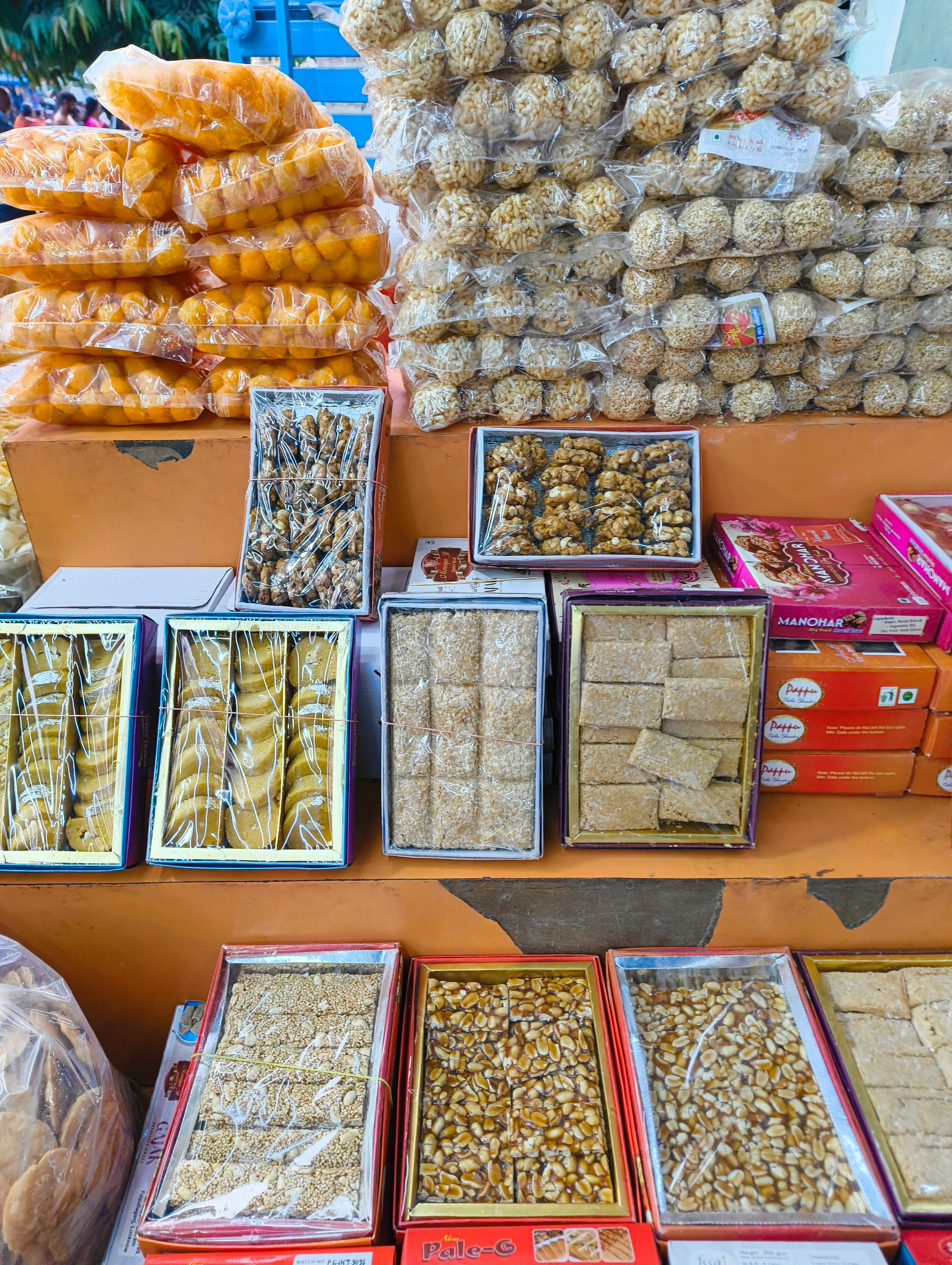
Open a Deepavali tray at a Malaysian Indian home and you are looking at a whole food system, not a snack plate. The Deepavali sweets Malaysia families serve range from crunchy spirals to fudge-like squares to syrup-soaked coils. Each type has a texture, a base ingredient and a role on the table.
Deepavali falls on Sunday 08/11/2026, according to PublicHolidays.com.my, with an additional holiday on Monday 09/11/2026 in most states except Kedah, Kelantan, Sarawak and Terengganu. The festival marks the triumph of light over darkness, and the same page describes it as celebrated with temple visits, kolam (rice flour designs) and sharing food with family and neighbours. Sweets are part of that sharing. Here is how to read what lands in front of you.
How to read a Deepavali sweets tray
Think in four textures: crunchy, ghee-and-milk, syrup-soaked and steamed. If you know the group, you can guess the base ingredient and what to expect.
Lists compiled by Reeracoen Malaysia and MyTrip Malaysia agree on most of the core line-up. Both list murukku, ladoo, adhirasam and jalebi. What follows draws on both.
The crunchy ones: murukku and friends
Murukku is the one most guests recognise. It is a crisp spiral made from rice and urad dal (black gram) flours, seasoned with sesame and cumin seeds, according to Reeracoen.
Achu murukku, often called rose cookies, is a different thing. It is made with a patterned mould and a light, slightly sweet batter. Omapodi, also called kara sev, is a savoury stick made from gram flour and spice.
The ghee-and-milk ones
This is where the tray turns rich. Most of these are dense, so a small piece goes a long way.
- Ladoo: Soft round sweets made from gram flour (besan), coconut or semolina, often with ghee and cardamom.
- Mysore pak: A dense, buttery sweet.
- Kaju katli: Diamond-shaped, smooth cashew sweets, commonly given as festival gifts, per MyTrip.
- Peda: A milk-based sweet flavoured with cardamom, often garnished with pistachios.
- Barfi or coconut burfi: A fudge-like sweet. The coconut version is made with grated coconut, sugar and milk.
- Nei urundai: Small balls built on ghee and a sweetened base.
- Rava kesari: A semolina dessert cooked with ghee, sugar and saffron.
If a friend hands you one without naming it, a good question is "what is it made from?" The answer is usually gram flour, semolina, cashew or milk, and that tells you a lot.
The syrup-soaked ones
Gulab jamun is deep-fried milk dumplings soaked in rose-scented syrup. Jalebi is a crisp, syrupy coil, bright and sticky. MyTrip describes both as soaked in sugar syrup, flavoured with cardamom or rose water.
Adhirasam is the South Indian entry in this group. Reeracoen calls it a South Indian sweet made from rice flour and jaggery or palm sugar, and MyTrip calls it a deep-fried rice flour and jaggery doughnut.
The steamed one and the tray extras
Kozhukattai
Kozhukattai is the odd one out. MyTrip describes it as a steamed rice dumpling filled with jaggery and coconut, listed as a traditional festival offering. It is the only entry on these lists that is steamed rather than fried or cooked in ghee.
Neon coconut candy
Reeracoen also lists coconut candy, neon-coloured hard sweets that emphasise festive hospitality. They are hard sweets, a different category from the milk and ghee ones.
If you are new to this, a good rule is one from each group. A murukku for crunch, a ladoo or kaju katli for richness, one syrup piece and one steamed or chewy piece if available.
A note on ingredients
The lists above name milk solids, ghee, cashews and pistachios, as well as semolina, which is a wheat product. If you or a guest have an allergy, ask what is in each piece rather than guessing by sight. For halal status, check whether a certified source or the host can confirm it, and look to JAKIM for what certification means in Malaysia.
For more on the festival itself, see 7 Deepavali traditions in Malaysia, explained. If you are planning a trip over the long weekend, see Deepavali 2026 long weekend trip plans from KL. To compare with another festive tray, try kuih 101: how to read a pasar pagi tray.
FAQ
What are the most common Deepavali sweets in Malaysia?
Murukku, ladoo, gulab jamun, jalebi, adhirasam and kaju katli appear on most lists, including those from Reeracoen and MyTrip.
What is the difference between murukku and achu murukku?
Murukku is a crisp savoury spiral made from rice and urad dal flours. Achu murukku, or rose cookies, uses a patterned mould and a light, slightly sweet batter.
When is Deepavali in 2026?
Sunday 08/11/2026, per PublicHolidays.com.my. Most states also observe a holiday on Monday 09/11/2026.
What is adhirasam made of?
Rice flour and jaggery or palm sugar, according to Reeracoen and MyTrip. It is deep-fried and described as a South Indian sweet.