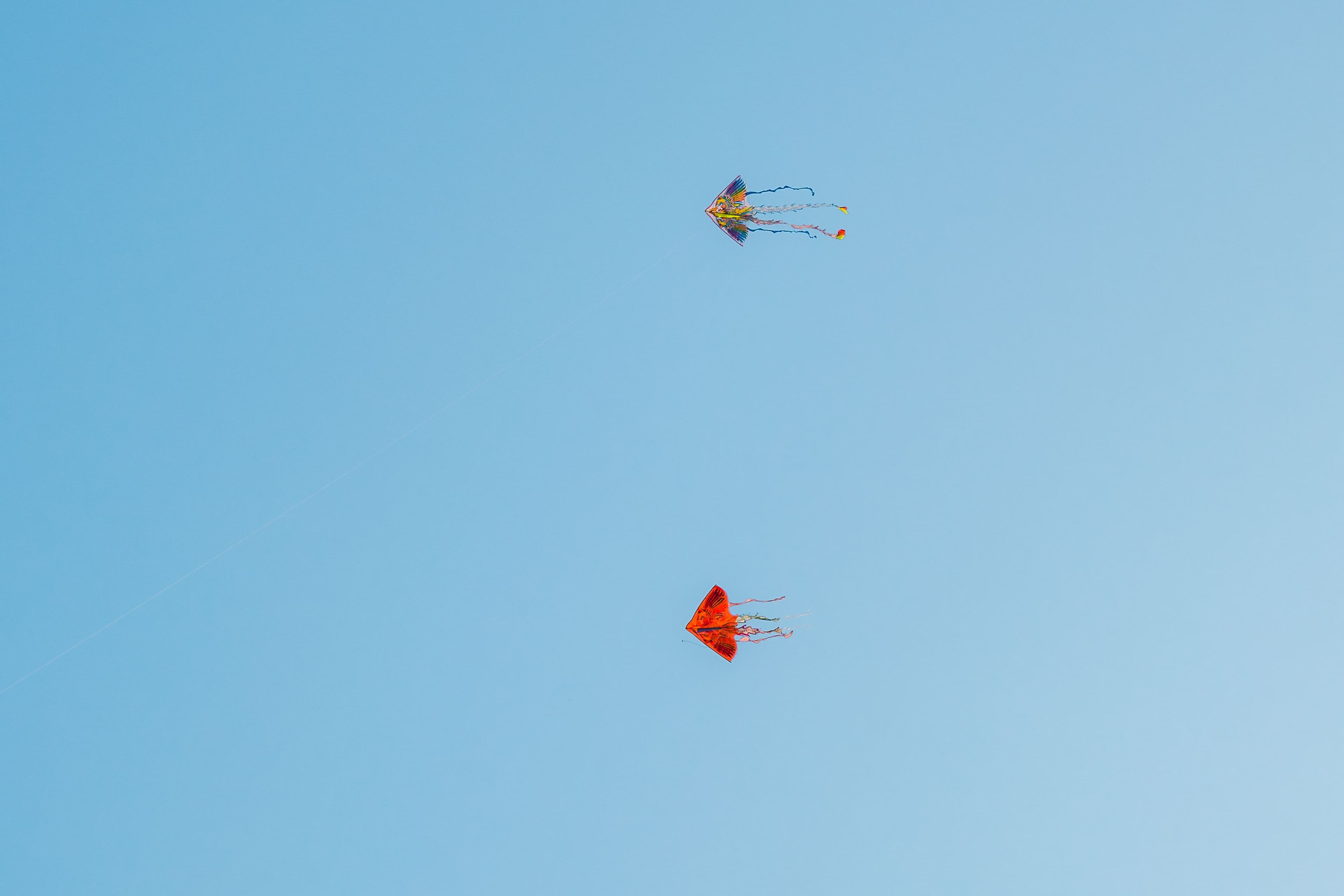
Stand in a harvested paddy field in Kelantan on a windy afternoon and there is a decent chance something the size of a small car will drift overhead, trailing a low, steady hum that carries for kilometres. That is a wau bulan (moon kite) doing more or less what it has done for generations. What has changed, quietly, is who is left to build the next one.
Wau bulan is Kelantan's most famous craft and one of Malaysia's most recognisable cultural symbols — bigger, more elaborately decorated, and more stubbornly alive than most people realise.
A kite older than the country itself
Malaysian tourism accounts and heritage writers trace wau bulan's origins to the Srivijaya empire, with a popular legend crediting a prince, Dewa Muda, with using an early kite frame to sketch out land he meant to conquer. It is a good story, and like most kite legends, unverifiable — so it survives the way legends do, told rather than footnoted.
Better documented is the kite's working life. Wau-flying has long been tied to the paddy calendar: once rice is harvested and fields lie fallow, monsoon winds pick up, and farmers historically had the time and weather for it. Tradition holds the kites doubled as scarecrows, their size and droning vibration meant to spook birds off the grain, and that the same hum was believed by some parents to help lull children to sleep. These are beliefs passed down with the craft, not claims stood behind here as fact — but they explain why the kite is not mere decoration to the people who fly it.
Every petal on the frame means something
A wau bulan starts as bamboo, split, thinned and bent into a frame roughly 2.5 metres wide and up to 3.5 metres tall — bigger than any other traditional Malaysian kite. Onto that frame, makers layer intricately cut coloured paper, glued sheet by sheet onto tracing paper before it is fixed to the bamboo.
Wau-makers describe the floral designs as more than ornament. Convention calls for a central flower, the ibu (mother), from which vines and blossoms spread outward — the vine read as a man's life path, its twists said to mirror how eventful it has been, with flowers along it representing the women in it. Older kites depicted flowers side-on; newer ones face forward. A ribbon across the frame gives the kite its signature "swoosh" as it turns.
A small moon kite takes one to two weeks to finish; a large one can take up to three months. Prices run around RM400 to RM500 for a modest kite, showpieces fetching close to RM9,000.
A national symbol nobody can quite agree on
Wau bulan's status as a symbol is not just sentimental. Malaysia's second-series 50 sen coin, circulated from 1989 to 2011, carried a detailed engraving of a wau bulan on its reverse — sitting alongside the hibiscus as shorthand for Malaysian identity.
Then there is the trivia everyone repeats and nobody checks: that the Malaysia Airlines logo is a wau bulan. The airline has said as much at times — but heritage documentation and design analysts note the logo's proportions, a broader chest and shorter tail, match wau kucing (cat kite) more closely, one of Malaysia's other officially recognised kite forms. Even the airline has given conflicting answers when asked directly. Small thing, but telling of how loosely wau bulan gets used as shorthand for "Malaysian craft" in general.
The part that should worry people who love it
The harder story is succession. Pauline Fan, creative director of heritage group Pusaka, has said it plainly: mastering the craft takes years, few artisans still hold the full traditional knowledge, and once that generation is gone, the skill will be hard to recover.
Kelantan's best-known wau-maker, Shafie Jusoh, has spent decades at it from a coastal workshop, cutting bamboo and paper daily out of habit as much as trade. Haniff Salleh, in his forties, is among the youngest people in Kelantan still making wau bulan full-time — not reassuring for a craft this old. Interest among visitors and students stays genuine; patient, full-time apprentices are harder to find.
Still airborne, in unexpected places
None of that has grounded the kite. The Kelantan International Giant Kite Festival returns to Pantai Irama in Bachok, drawing flyers and giant-kite displays to the coast. Further south, the Pasir Gudang World Kite Festival, now well into its third decade, pulled in well over a hundred international participants from dozens of countries this year, landing an entry in the Malaysia Book of Records.
Wau bulan has also found its way somewhere unexpected: in late 2025, Sarawak-born design student Mohammad Faris Mohd Fairusham won the "Air" category at the World of Wearable Art show in Wellington, New Zealand, with a piece titled simply Wau Bulan — rattan wings, batik and repurposed materials built around the kite's silhouette, judged against entries from 17 countries. It is an afterlife a centuries-old craft rarely gets: not preserved behind glass, but reinterpreted by someone who grew up seeing it as home.
The same pattern of harvest-linked customs carrying folklore alongside them shows up across Malaysia's communities, from Kaamatan and Gawai Dayak to everyday domestic rituals like kolam-making. The succession worry is not unique to Kelantan's kite-makers, either — it echoes the same apprenticeship gap facing getai performers during Hungry Ghost Festival season.
Wau bulan does not need saving through nostalgia. It needs what any living craft needs: buyers, students, time. For now, it still has all three, just barely.
FAQ
What does "wau bulan" mean?
Wau means kite in Kelantanese Malay, and bulan means moon. The name refers to the crescent-moon shape formed by the kite's lower section when it is coloured and airborne.
Is wau bulan still flown today?
Yes. It remains most closely associated with Kelantan, flown recreationally and at organised festivals, though fewer artisans now build them full-time than in previous generations.
Why is it called a moon kite?
The kite's lower wing is shaped to resemble a crescent moon, visible once it is coloured and flying high enough against the sky.
Is wau bulan the basis of the Malaysia Airlines logo?
It is widely assumed to be, but design analysts and heritage sources argue the logo's proportions more closely match wau kucing, a related but different traditional kite.
Who still makes wau bulan today?
A small number of Kelantanese artisans, including long-established makers such as Shafie Jusoh, continue the craft, though heritage groups have flagged a shortage of younger apprentices.