Long before Melaka became a UNESCO postcard, Tamil traders from South India were landing on its shores, marrying local women, and quietly building a community that is still Hindu today but speaks almost no Tamil. They're the Chetti Melaka, also written Chitty Melaka — Malaysia's other Peranakan community, the one that rarely makes it onto a tourist itinerary.
Where the Baba Nyonya blended Chinese ancestry with Malay custom, the Chetti Melaka did something similar with South Indian roots, while holding onto Hindu worship through five centuries of Portuguese, Dutch, British and Japanese rule. Here's what's worth knowing about a community small enough that its own survival is the story.
Traders who never sailed home
Historical accounts trace the Chetti Melaka to merchants from India's Coromandel Coast who settled in Melaka during the Melaka Sultanate of the 15th and 16th centuries, drawn by the port's position on the spice trade route. Portuguese records counted around 300 to 400 Chetti families living in the Sultanate at the time, and a Chetti leader, Naina Chattu, reportedly held the post of bendahara (chief minister) and minted the city's first coins.
The traders arrived largely without wives and married local Malay, Chinese, Javanese and Batak women. Their descendants adopted the Malay language, dress and cuisine of their new home, while keeping the Saivite Hindu faith of their forefathers, centred on the worship of Shiva.
When the Dutch took Melaka in 1641, Indian Muslim traders moved in on Chetti trading networks, pushing the community into agriculture instead. The Dutch granted them farmland outside the city walls in the late 18th century, and that plot became Kampung Chetti.
Malaysia gave official recognition to the Chinese-descended side of this story when Baba Nyonya became a distinct race on identity documents. The Chetti Melaka's own recognition has moved more slowly, even though their roots run just as deep.
Kampung Chetti, Gajah Berang: a shrinking home base
Kampung Chetti, off Jalan Gajah Berang in Melaka city, has been the community's only known hometown for centuries. Most families have long lost track of exactly where in India their ancestors came from.
By the 1980s, researchers counted roughly 400 Chetti families still living there. Today, according to Singapore's National Heritage Board, fewer than 50 Chetti Melaka families remain in the kampung itself. Many descendants moved to Kuala Lumpur or Singapore for work, especially from the early 20th century onward, when Singapore's colonial civil service offered opportunities Melaka no longer could.
The village was officially recognised as a historic site in 2002, and a small Chetti Museum near its entrance, with an entry fee of around RM2, displays photographs, costumes and artefacts of everyday Chetti life. In 2013, a proposed condominium, hotel and access road through Kampung Chetti drew objections from residents worried about the survival of the village and an 1827 temple within it — a reminder that heritage status alone doesn't guarantee protection.
Hindu faith, Malay everyday life
The Chetti Melaka are practising Hindus of the Saivite tradition. Melaka's Sri Poyatha Moorthi Temple, built in 1781 by community leader Thavinayagar Chitty on land granted by the Dutch, is considered the oldest surviving Hindu temple in Malaysia and one of the oldest functioning Hindu temples in maritime Southeast Asia. It stands on Jalan Tukang Emas, nicknamed "Harmony Street" for its proximity to a mosque and a Chinese temple. The Chetti community today looks after around ten temples across Melaka.
Their most important annual event is Sembahyang Dato Chachar, also called Megammay Thiruvizha, a festival for the goddess Mariamman held at the Muthu Mariamman Temple in Gajah Berang. They also observe Pongal, Mahashivratri, Puthandu (Tamil New Year), Navaratri and Deepavali, plus twice-yearly Parachu prayers honouring ancestors. Families who intermarried with Chinese Melakans over the generations also mark occasions like Qingming.
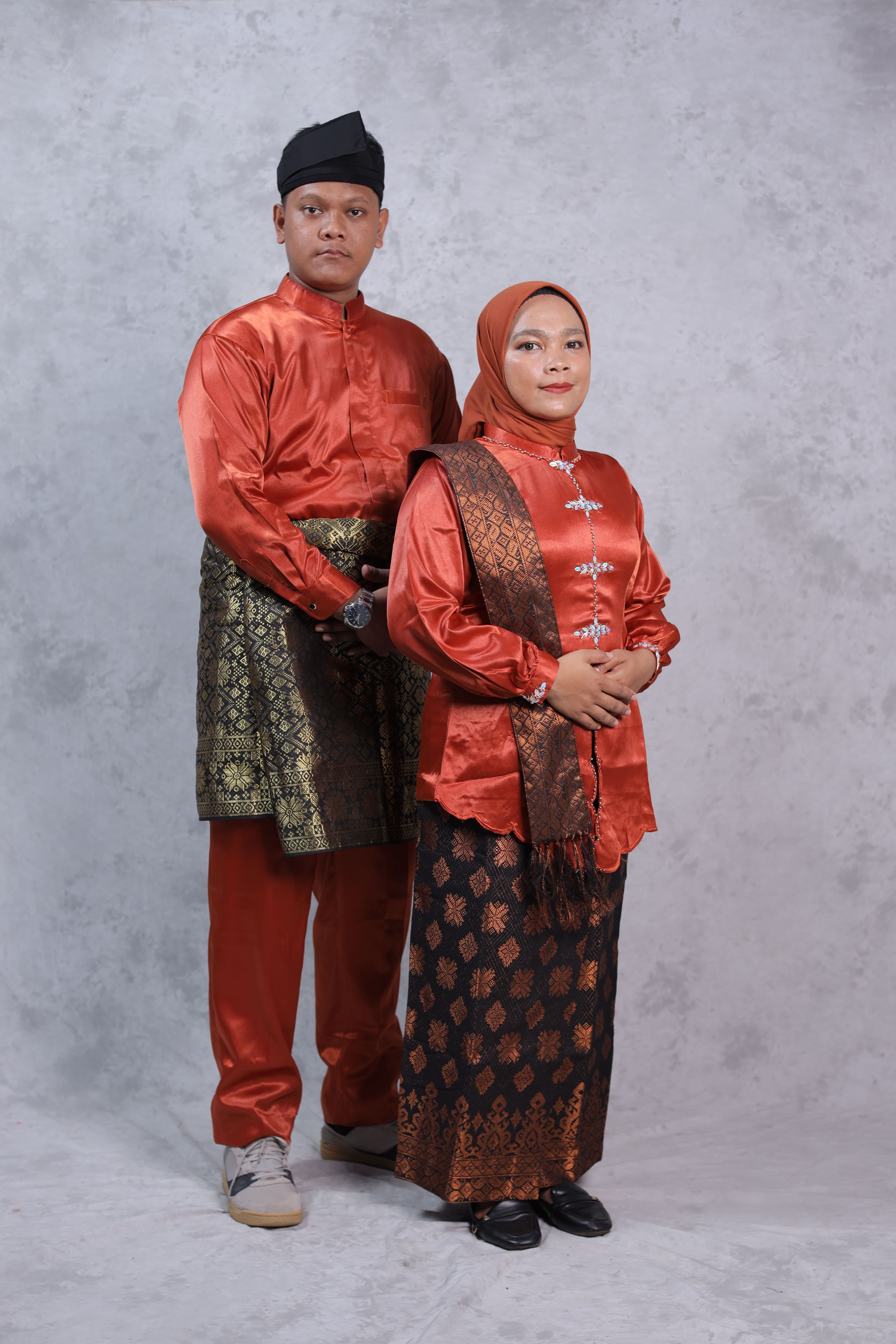
Daily life, though, runs on Malay rhythms. The community speaks Malay rather than Tamil at home. Women traditionally wear sarong kebaya and baju kurung fastened with keronsang brooches, much like their Nyonya counterparts, while men once wore checkered sarongs with a knotted headcloth called talapa. Chetti food follows the same blend — dishes like ikan parang (fish curry) and sambal belimbing lean on Malay spicing and coconut milk, puttu appears at coming-of-age ceremonies, and dosai is served at Deepavali.
Chetti Creole: a language running out of speakers
Perhaps the clearest sign of how thoroughly the Chetti Melaka absorbed their surroundings is their mother tongue. Scholars call it Chetti Creole — a Malay-based patois folding in Tamil and some Chinese loanwords, first documented by researcher J.A. Grimes in 1996 and later by Noriah Mohamed in 2009. In Chetti Creole, "grandmother" is the Malay nenek, but "grandfather" is the Tamil thatha.
The catch is that fewer young Chetti Melaka speak it. English and standard Malay have taken over daily communication, especially among the diaspora in Singapore and Kuala Lumpur. Researchers and community members alike describe the creole, along with lifecycle rituals like the sadanggu puberty ceremony, as fading from everyday use as families intermarry further outside the community.
Small steps to keep the heritage alive
The Chetti Melaka's cultural footprint got a boost in December 2024, when the kebaya — the fitted blouse worn by Malay, Baba Nyonya, Chitty and Portuguese-Eurasian women across Melaka — was jointly inscribed on UNESCO's Representative List of the Intangible Cultural Heritage of Humanity by Malaysia, Singapore, Indonesia, Brunei and Thailand. It's a rare instance of Chetti dress being folded into an official heritage recognition alongside the region's better-known Peranakan groups.
Documentation efforts have picked up too. Singapore's Indian Heritage Centre partnered with the Peranakan Indian (Chitty Melaka) Association Singapore on an exhibition and oral-history project tracing the community's roots between Melaka and Singapore, and Melaka-based community groups continue to run cultural programmes to keep the cuisine and customs visible. None of it changes the arithmetic of a shrinking population, but it means the community's own story is finally being told in its own words — including at Deepavali, when doorstep rituals shared across Malaysia's Hindu communities light up Kampung Chetti alongside the rest of Melaka.
FAQ
Are the Chetti Melaka the same as the Baba Nyonya?
No. Both are Peranakan, meaning locally-born and culturally hybrid, communities in Melaka. But the Baba Nyonya trace their ancestry to Chinese traders, while the Chetti Melaka descend from South Indian Tamil traders and remain practising Hindus, rather than adopting Chinese folk religion or Buddhism.
Do the Chetti Melaka speak Tamil?
Not typically. Despite their Tamil ancestry, most Chetti Melaka speak Malay as a first language, along with Chetti Creole, a Malay-based patois with Tamil and Chinese loanwords. Fluency in Tamil itself was largely lost over generations of intermarriage and cultural assimilation.
Where is Kampung Chetti, and can visitors go?
Kampung Chetti sits off Jalan Gajah Berang in Melaka city. It's a residential village rather than a formal attraction, but visitors can view the small Chetti Museum near the entrance and walk through the area with respect for residents' privacy.
Is the Sri Poyatha Moorthi Temple open to the public?
Yes. The temple, on Jalan Tukang Emas, known as Harmony Street, functions as both an active place of worship and a heritage site. Visitors are welcome to view it respectfully, following the same etiquette expected at any working Hindu temple.
How many Chetti Melaka are left today?
Exact figures vary by source, but Singapore's National Heritage Board notes that Melaka is now home to fewer than 50 Chetti Melaka families, down from roughly 400 families in the 1980s, while Singapore's own Chetti Melaka community is estimated at around 5,000 people.