Somewhere between a birth certificate counter and five centuries of history, something quietly shifted for one of Malaysia's oldest communities.
Since October 2025, Peranakan Chinese in Melaka have been able to apply to have their race listed as "Baba Nyonya" on official documents, instead of the blanket "Chinese" category they'd been filed under since independence, as reported by The Star. The pilot began in Melaka and was extended to the rest of the country from January 2026, meaning Baba Nyonya Peranakan Malaysia families anywhere can now, at least in theory, apply.
It sounds like a bureaucratic footnote. For the community, it's closer to getting a name back.
Malaysia's newest official race, on paper
The change came from the Home Ministry, with the National Registration Department (NRD) handling applications to amend the "keturunan" (descent) field on birth certificates and MyKad. It isn't automatic. Applicants first need a supporting letter from the Baba Nyonya Association of Malaysia confirming their ancestry, then an NRD interview, before approval. Once the first person in a family line is approved, other members can apply under the same lineage.
Baba Nyonya Association chairman Datuk Ronald Gan, who said he'd pushed for this for more than a decade, called it a landmark development. He was careful to note what it isn't, too: the reclassification doesn't grant Bumiputera status, and the community remains, administratively, part of the wider Chinese population. It's a sub-ethnic label, not a new pillar of Malaysia's official race categories.
By early January 2026, Free Malaysia Today reported around 50 applications had already been processed nationwide, with officials confirming a similar amendment process exists for Malaysia's Siamese communities near the Thai border.
From Melaka Sultanate to a distinct identity
"Baba" wasn't actually new. It was a recognised category in colonial-era records, going back to Chinese traders who settled in Melaka as early as the 14th and 15th centuries and married local Malay women, building families and, eventually, a culture that belonged fully to neither side.
That category disappeared after 1957, when the community was folded into "Chinese" for administrative simplicity. Gan's association says descendants can trace their lineage back seven generations, and some Peranakan Chinese families in Melaka even held Malay Customary Land grants under British and Dutch rule, an odd historical detail suggesting they were once considered, informally, sons of the soil.
Peranakan itself just means "locally born" in Malay. It's less an ethnicity than a description of what happens when two communities live next to each other for five hundred years.
Baba, Nyonya: sorting out the honorifics
Baba refers to a Straits-born man, Nyonya to a Straits-born woman, both honorifics rather than clan names. Put together, they name a community that speaks a hybrid Peranakan patois blending Bahasa Melayu with Hokkien and other Chinese dialect words, and that has historically eaten with hands rather than chopsticks, exchanged pantun-style poems in Malay, and folded Malay custom into Chinese ancestor worship without treating either as a compromise.
This is a genuinely mixed-heritage story, in the same spirit as Kristang traditions keeping Melaka's Portuguese-Eurasian heritage alive, even though the two communities and their histories are entirely separate.
Penang's Hokkien lilt versus Melaka's Malay heartbeat
Not all Peranakan culture sounds the same. Melaka's Baba Nyonya patois leans heavily on Malay, the product of the longest, deepest developmental runway of any Straits Chinese settlement. Penang's version, sometimes called Baba Hokkien, keeps Hokkien as its backbone and borrows Malay words rather than the other way round, a difference traced to Penang's Peranakan community forming later and absorbing waves of newer Chinese migrants who kept topping up the Hokkien.
Neither version is more "authentic" than the other. They're two branches of the same fusion, shaped by two different port towns.
Kebaya, kerawang and a plate of laksa
The kebaya nyonya, the fitted lace blouse worn over a batik sarong, is probably the most photographed piece of Peranakan material culture, and for good reason. Its defining feature is kerawang, an intricate cutwork embroidery technique that builds openwork lace patterns of flowers, fruit and birds directly into the fabric.
Nyonya cuisine tells a similar story of two traditions cooked into one pot. Chinese ingredients meet Malay-Indonesian technique: turmeric, galangal and lemongrass, coconut milk, tamarind, belacan and candlenuts all show up regularly. Laksa is the most travelled example, splitting into the sour, tamarind-forward asam laksa associated with Penang and the coconut-rich laksa lemak found further south around Melaka.
Walking through the heritage houses
Melaka's Baba & Nyonya Heritage Museum, on Jalan Tun Tan Cheng Lock, sits inside a mansion built from three combined terrace lots acquired by the wealthy Chan family in 1861. Four generations of the family lived there before it opened as a museum in March 1985, reportedly the first privately run museum in Malaysia, and it's still managed by descendants today.
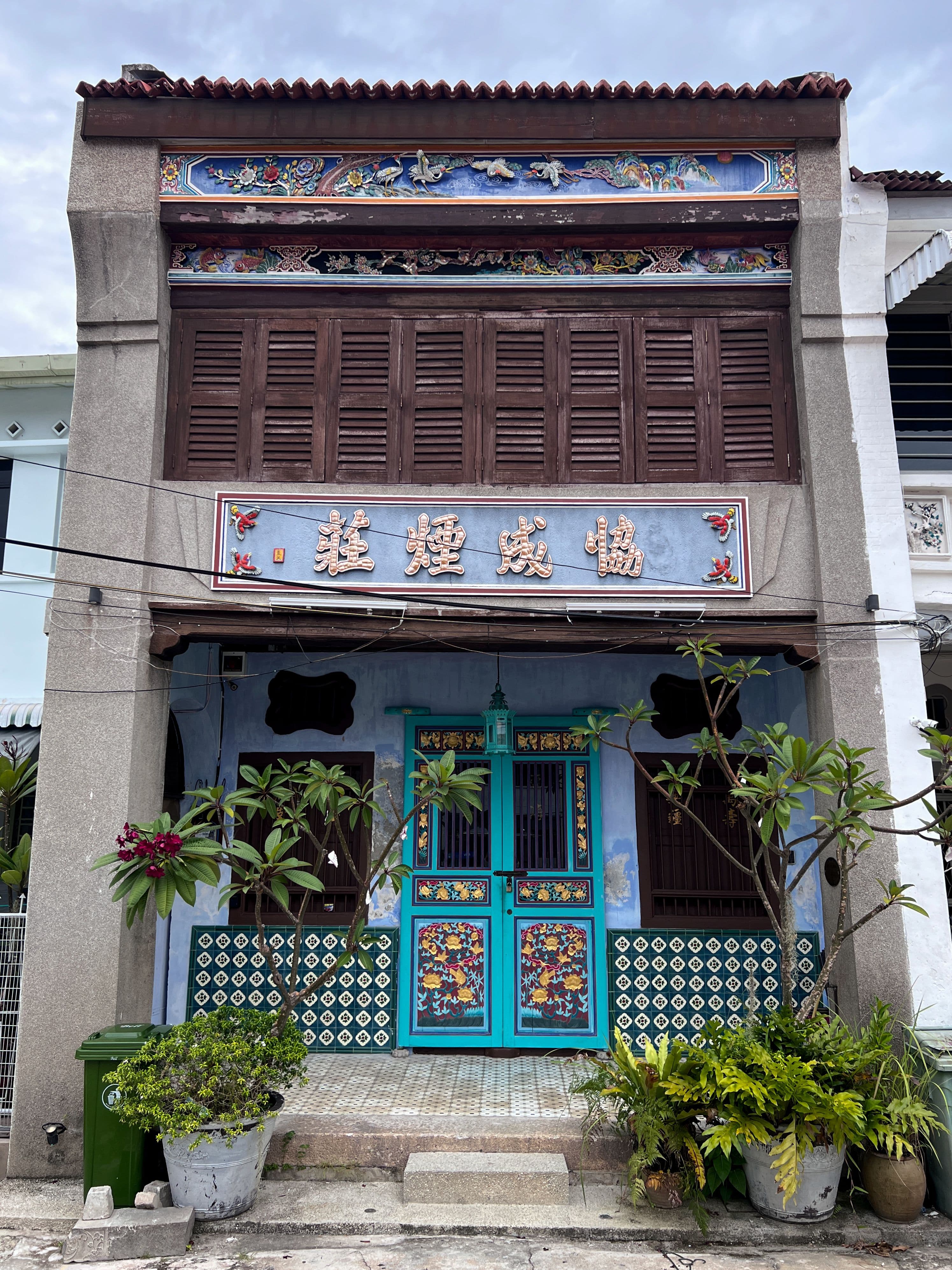
Penang's equivalent experience is Seven Terraces in George Town, a row of seven 19th-century Anglo-Chinese shophouses restored into an 18-suite boutique hotel by heritage hotelier Christopher Ong. Rosewood furniture, carved four-poster beds and antique collections fill the suites, and the property's Kebaya Dining Room serves Peranakan food within the same walls.
FAQ
What does the Baba Nyonya recognition actually change?
It allows eligible individuals to amend the race or "keturunan" field on their birth certificate and MyKad from "Chinese" to "Baba Nyonya," a sub-ethnic classification, after verification by the Baba Nyonya Association of Malaysia and an NRD interview.
Does this give the Baba Nyonya community Bumiputera status?
No. Community leaders and reports have been explicit that the reclassification is a sub-ethnic recognition, not a change to Bumiputera status, and the community remains part of the broader Chinese population administratively.
What's the difference between Baba and Nyonya?
Baba is the honorific for a Straits-born man, Nyonya for a Straits-born woman. Together they describe the Peranakan community broadly, without being separate clans or castes.
Is Peranakan culture the same in Melaka and Penang?
No. Melaka's Baba Nyonya patois and customs lean more heavily on Malay language and tradition, developed over a longer period, while Penang's Peranakan culture, particularly its Baba Hokkien speech, stays closer to Hokkien roots.
Where can I see Peranakan heritage in person?
Melaka's Baba & Nyonya Heritage Museum on Jalan Tun Tan Cheng Lock and Penang's Seven Terraces in George Town are both preserved Peranakan houses open to the public, alongside numerous Nyonya restaurants and kebaya boutiques in both heritage towns.