Ask ten Malaysians what makes a roti canai good and you will start an argument in under thirty seconds. Everyone agrees it should be crispy outside, soft inside, torn apart with bare hands. Nobody agrees on much else.
That is the point. Roti canai is less a single dish than a technique: dough stretched, oiled, folded, and slapped onto a hot griddle. The technique is exactly why the debates never stop.
The Fold Is the Whole Argument
Forget the curry for a second. The real craft happens before the dough ever touches heat, when it gets stretched paper-thin, folded back on itself again and again, then coiled into a disc. Those folds trap air and fat between dozens of thin sheets.
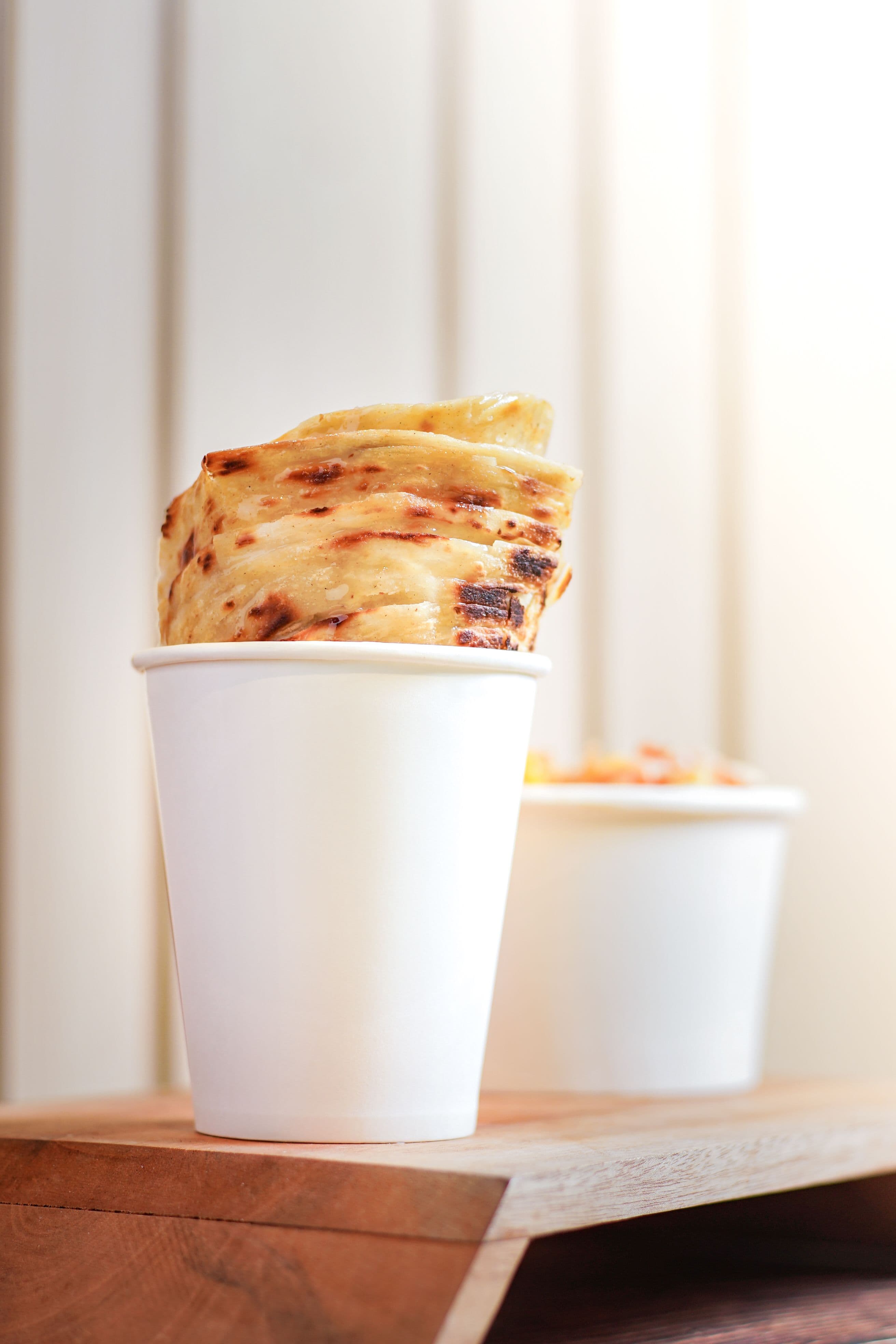
When it hits the griddle, usually in ghee or margarine, steam pushes the layers apart. A good cook finishes by clapping the roti between their palms, shattering the layers further apart.
That clap matters more than people give it credit for. Skip it, or rush it, and the roti looks right but eats dense: chewy in the wrong way, closer to wet dough than flaky bread. The fold-and-clap combo is why a well-made roti canai carries dozens of gossamer layers in a single piece, and why a badly made one just tastes like an oily pancake.
This is also why "the best roti canai" is such a personal call. Some want it thin enough to see light through the layers. Others want it thick and doughy in the middle with a crackling shell. Both are valid. That is the debate, and it is a real one.
International food critics have noticed too. TasteAtlas has repeatedly ranked roti canai among the world's best breads and street foods, a fact Malaysians love repeating whenever naan gets mentioned.
Roti Telur, Roti Tissue, Roti Bawang: Pick Your Fighter
Order "roti canai" plain, or roti kosong if you want to sound like you know what you are doing, and that is the control group. Everything else is a variation on the fold.
Roti telur
Egg cracked into the dough before it is folded shut, so it cooks inside the layers instead of on top. Done right, the yolk stays a little runny and mixes into the curry. Done wrong, it is rubbery and dry, which is a genuine tragedy.
Roti bawang
Chopped onions worked into the dough for crunch and a faint sweetness once caramelised. Underrated.
Roti tissue (roti helikopter)
The showpiece. Stretched thinner than usual, cooked until almost see-through and deeply browned, then rolled into a tall cone and dusted with sugar or drizzled with condensed milk. This is dessert, not breakfast, built for spectacle as much as taste.
Roti pisang
Banana slices folded into the dough, usually finished sweet with condensed milk or sugar. A gateway variant for anyone who insists roti canai should double as dessert. Not wrong, just a different meal.
Roti planta
Named for the margarine brand, not a secret ingredient. This is roti canai cooked with extra margarine worked through the dough for a richer, slightly sweeter finish. Simple, but it has its loyalists.
So What Actually Makes One Good
Judging roti canai is not about the toppings. It is about texture, and texture is non-negotiable even when everything else is up for debate.
A good one should be crisp on the outer layers, with visible char in patches: not burnt, but the dark, blistered spots that mean the pan was hot enough and the cook was not rushing. Inside, it should pull apart in sheets, not clumps. If it tears away in one dense wad, someone skipped the clap, or the heat was off.
Doughiness is the real enemy. A roti that is pale, soft all the way through, and bends instead of shattering has failed at the one job it has. Grease is fine, this is a fried bread, but it should not pool visibly on the plate.
Then there is how it is served. Dhal, a thin lentil curry, and a simple fish or chicken curry are the standard dips, with sambal on the side for anyone who wants heat. Eating it "banjir" style, flooding the plate with curry, is a legitimate choice, not laziness. The roti should survive a dunk without dissolving into mush; if it falls apart in the gravy, that is on the roti, not the diner.
A Word on Where It Came From
None of this exists without the Mamak community: Malaysians of South Indian Muslim heritage, many tracing their roots to Tamil Muslim migrants who arrived in colonial-era Malaya. They brought the dough-folding technique with them, adapted it with local ingredients like ghee, and built the mamak stall culture that still serves roti canai around the clock today.
The name itself is disputed, with some tracing "canai" to Chennai and others to a Malay term for rolling dough thin. What is not in question is the bread's roots in Mamak cooking, and the community that carried it into daily Malaysian life.
That history is worth remembering whenever the dish gets called a purely "Malaysian invention" without a footnote. It grew up here, in mamak kitchens, alongside teh tarik and curry, and kopitiam and mamak culture have always run on parallel, sometimes overlapping tracks. Crediting it honestly means naming the community behind it, much like ordering with confidence at a nasi kandar counter means understanding the culture behind the counter too.
FAQ
What is the difference between roti canai and roti prata?
Close cousins sharing the same dough-folding technique and South Indian roots. Roti prata is the Singapore name, roti canai the Malaysian one, and each side has its own quirks in thickness and serving style.
Is roti canai always fried in ghee?
Traditionally yes, though many mamak stalls today use margarine or a blend, partly for cost and partly for a different flavour profile. Ghee gives a richer, slightly nuttier taste.
What should a first-timer order?
Start with roti kosong (plain) alongside dhal and curry to judge the roti on its own texture. Once that baseline clicks, roti telur or roti bawang make a lot more sense.
Why do some stalls serve it with sugar instead of curry?
That is usually roti tissue or roti pisang territory. The thinner, sweeter variants are built to be eaten as dessert, so condensed milk or sugar suits them better than dhal.