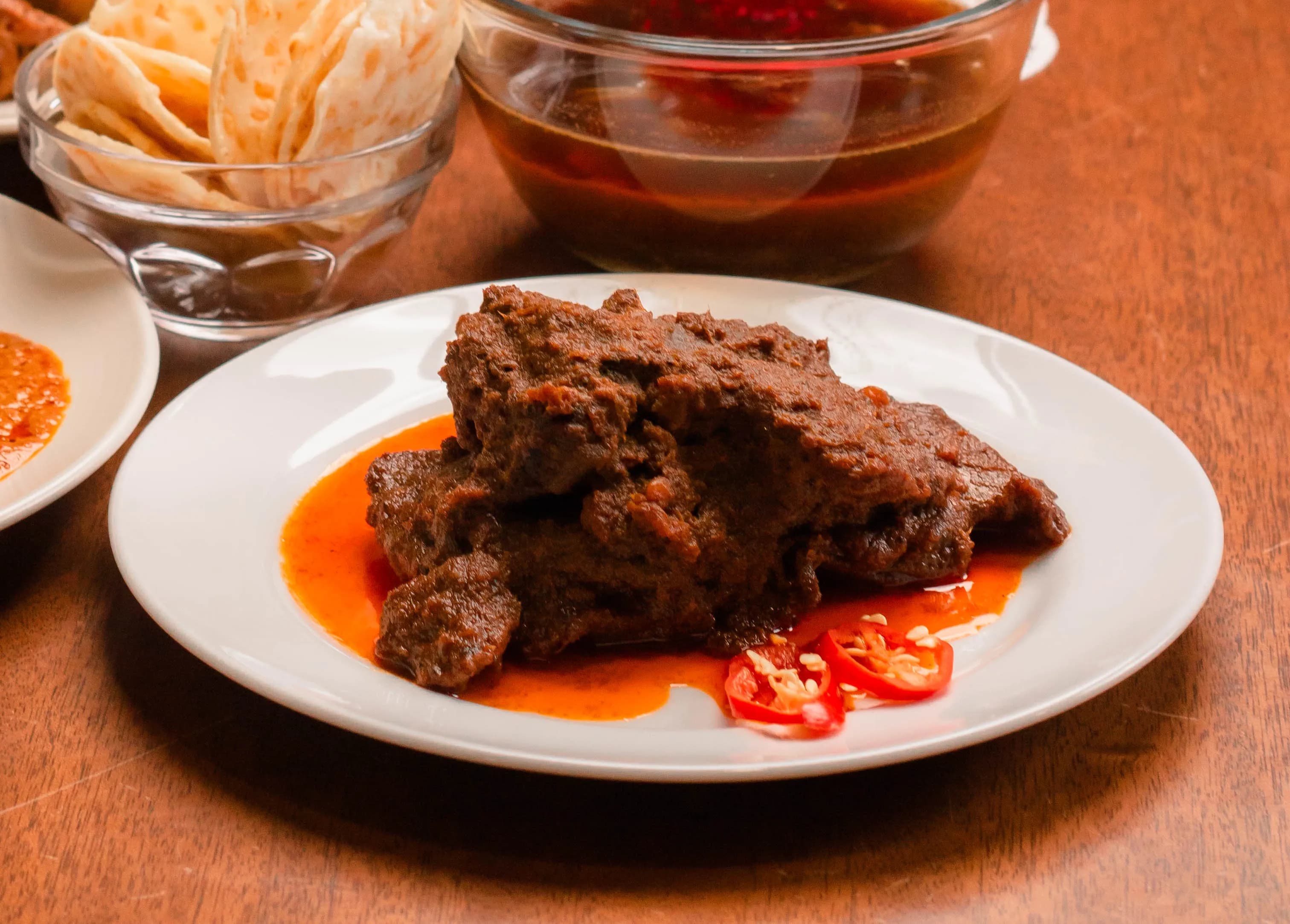
Walk up to a nasi kandar counter for the first time and nobody hands you a menu, because there isn't one. There's a glass cabinet of trays — curries, fried chicken, squid, okra, salted egg — and a server who expects you to just point. Most first-timers freeze right there, unsure whether to ask questions or grab a tray and hope for the best. The good news: nasi kandar runs on maybe five rules total, and once you know them, the counter stops being intimidating and starts being the fastest, cheapest good meal in the country. None of it is complicated once someone actually explains it, which is more than most food guides bother doing.
What Nasi Kandar Actually Is
Nasi kandar is Penang's contribution to the national menu: steamed white rice or ghee-rich nasi briyani, served with a self-selected mix of curries and side dishes, the way you'd build a plate at a buffet except every item is ladled or poured for you. The dish traces back to Indian Muslim traders in George Town, who originally carried the rice and curry pots on a shoulder pole (a kandar) to sell to dock workers. That street-food origin is still visible in how the counters operate today — fast, informal, and built for people who know exactly what they want.
The Two Words That Actually Matter
Forget memorising the names of every curry on the tray. Two words cover almost the entire transaction.
Kuah campur means "mixed sauce" — you're asking for more than one curry gravy on your rice, rather than a single sauce.
Banjir literally means "flood." Ask for your rice banjir and the server will ladle several curries over it at once — fish curry, meat gravy, dhal — layering flavours that don't taste the same eaten separately. It's the closest thing nasi kandar has to a house special, and it's not on any menu because there is no menu.
Everything else is just pointing. Say "this one" (or the local favourite, "ni") at a tray, nod at the fried chicken, hold up two fingers for two pieces of squid. Servers who've done this for twenty years read gestures faster than words anyway.
One more useful word: tambah, meaning "add more." If your rice runs out before the curry does — a common problem once you've gone banjir — asking for tambah nasi gets you a top-up, usually at no extra charge or a small one depending on the stall.
How the Counter Actually Works, Step by Step
1. Pick your base. Plain steamed rice is standard. Nasi briyani costs more and comes with its own spiced ghee aroma — order it if you want the richer version.
2. Choose your protein. Chicken, beef, mutton, fish, squid, prawns — fried or in curry. Point at what looks good; there's no shame in asking "what's this?" if a tray is unfamiliar.
3. Add vegetables. Fried cabbage, long beans, potatoes, turnip, spinach, or boiled okra usually round out the tray selection.
4. Decide on extras. Papadam, a fried egg, salted egg, or fish roe are common add-ons. Offal (liver, giblets) is available if you're curious.
5. Say banjir or kuah campur. This is the step people skip and regret. A single dry curry on rice is fine, but it's not the full experience.
6. Pay after you eat — usually. Some stalls collect payment upfront, but most nasi kandar counters, especially the old-school ones, hand you a marked slip and settle the bill once you're done, after you've washed your hands at the sink most stalls keep near the entrance.
What It Costs and Why the Bill Sometimes Surprises People
A simple plate — rice, one curry, one vegetable — typically runs somewhere in the RM10–RM15 range at most stalls, cheaper in Penang than in Kuala Lumpur. The bill climbs fast once you start adding proteins and extras, because each item is priced separately and mentally tracking "one more piece of chicken, one more egg" rarely happens while you're pointing at trays. This is the actual reason nasi kandar has a reputation for surprise bills — not overcharging, just under-counting on the customer's end. If cost matters, ask the price of anything unfamiliar before it lands on your plate; nobody will think it's a strange question.
Ordering for Takeaway (Bungkus) Works a Little Differently
Eating in lets you point at trays in person, but ordering bungkus (takeaway) means describing what you want out loud instead, which trips up a lot of regulars, not just newcomers. Keep it simple: name your protein, say banjir or kuah campur if you want it, and specify roughly how much rice you want, since portion sizes for takeaway are more negotiable than a plated meal. Curries travel reasonably well in the sealed plastic-and-rubber-band packaging most stalls use, though rice can turn slightly gummy if it sits for more than an hour — worth keeping in mind if you're ordering ahead for a group lunch rather than eating within the next 20 minutes.
Nasi Kandar Isn't Just a Penang Thing Anymore
While the dish is inseparable from George Town's food identity, nasi kandar stalls are now a fixture in Kuala Lumpur, Ipoh, and beyond — some open 24 hours, which makes them a genuine alternative to a kopitiam or mamak for a very late or very early meal. The counter ritual barely changes from city to city; the trays and regional specialities do. Penang stalls lean harder into seafood curries given the coastal supply chain, according to food coverage from The Rakyat Post, while KL branches often stock a wider fried-chicken selection to suit office lunch crowds.
For visitors trying to plan around it, Penang's official tourism guide is worth a look before a food trip to George Town, since it lists which historic stalls are still family-run versus which have expanded into chains.
The One Manglish Phrase Worth Knowing
If a server asks "banjir tak?" — flood or not? — saying "boleh" (sure, go ahead) is enough. It's a small phrase, but using it correctly usually gets you a slightly more generous ladle, purely because it signals you know what you're doing.
FAQ
What does "banjir" mean at a nasi kandar stall?
Banjir means "flood" in Malay. Asking for your rice banjir means the server pours several curry gravies over your rice at once, rather than a single sauce.
Is nasi kandar always spicy?
Most of the curries are spiced, though heat levels vary by stall and by curry. Fish and meat gravies tend to be spicier than vegetable-based ones like dhal, so mixing in a milder curry lets you control the overall heat.
How much does a nasi kandar meal cost?
A basic plate with rice, one curry, and one vegetable typically costs around RM10 to RM15, according to Penang food guides, though prices rise with each additional protein or side you add, and Kuala Lumpur stalls often run slightly higher than Penang originals.
Where did nasi kandar come from?
Nasi kandar originated in Penang, brought over by Indian Muslim traders who carried rice and curry pots on a shoulder pole, known as a kandar, to sell to labourers and dock workers in George Town.
Can I order just one curry instead of a mix?
Yes — asking for a single curry without the mixed banjir treatment is completely normal, especially if you have a strong preference for one particular gravy or want to keep the bill predictable.
Can I order nasi kandar for takeaway?
Yes, most stalls offer bungkus (takeaway) as standard. Describe your protein and rice amount clearly since you won't be pointing at trays in person, and eat it within the hour if possible, since rice can turn slightly gummy after sitting too long in sealed packaging.