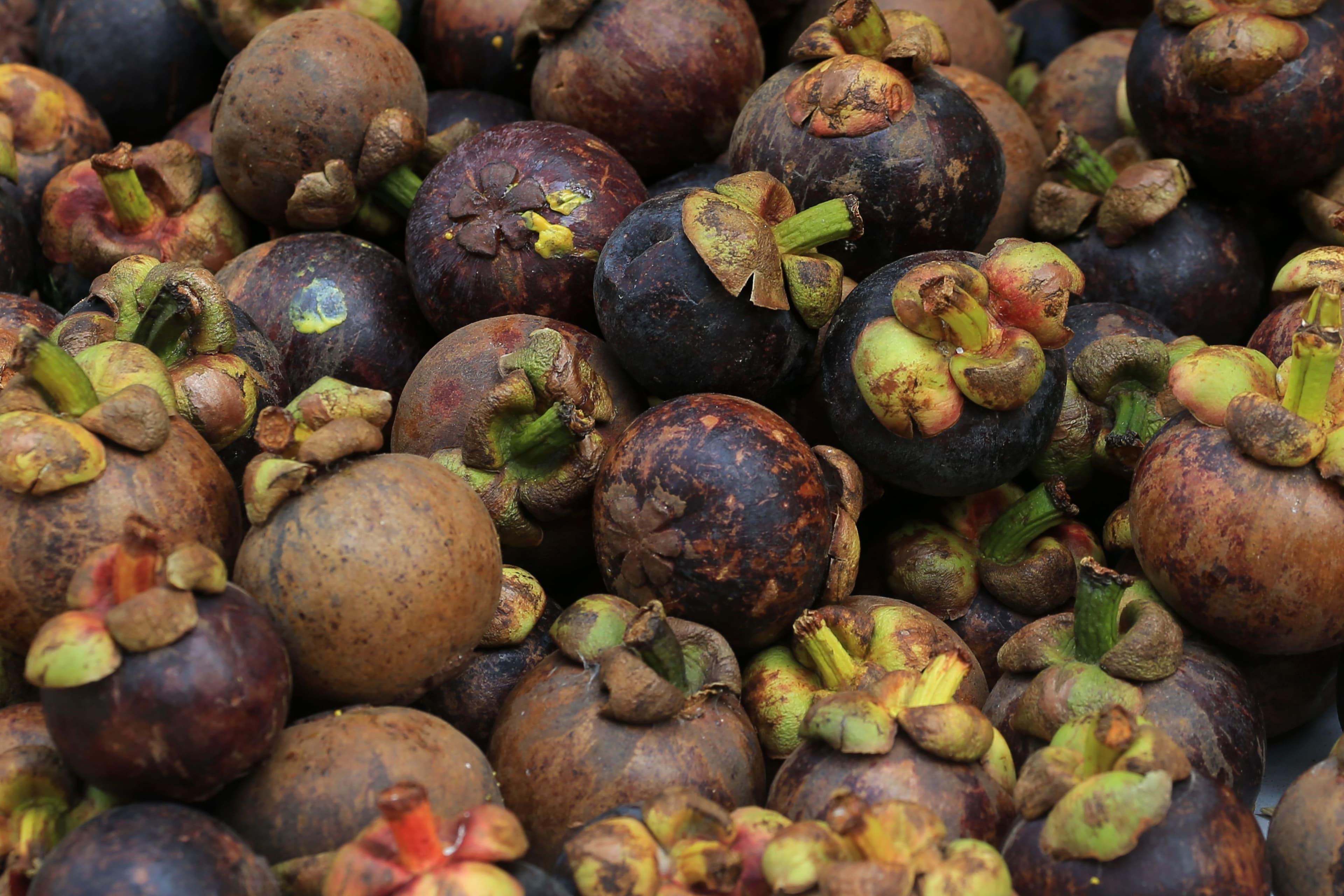
Something has flipped at the pasar this year: the purple fruit everyone used to buy on the cheap, almost as an afterthought to durian, is now the pricier one on the table.
Mangosteen season in Malaysia usually peaks between June and August, with a smaller run later in the year. It is the stretch when Balik Pulau in Penang, the west-coast belt long known as the island's unofficial fruit basket, fills up with roadside stalls selling mangosteen alongside rambutan, pulasan and cempedak. That part of the calendar hasn't changed. What has changed is the price tag, and it's worth knowing before you go shopping this week.
Mangosteen season Malaysia 2026: the price flip
Durian has always been the expensive one, the fruit people budget for. This year, several fruit sellers told The Star that mangosteen has overtaken it. Musang King, which used to command around RM100 per kg at its peak, has been selling for as low as RM16.80 per kg, while a locally grown variety known as Mesta or Japanese mangosteen was going for about RM20 per kg.
That is not a small gap in the fruit world, and it is a genuine reversal of roles. For years mangosteen was the modest supporting act next to durian's main event. Sellers quoted in the same report said the shift toward higher mangosteen prices began around December last year, meaning this isn't a one-week blip, it has been building for months and is now colliding with peak season.
Why is mangosteen suddenly so expensive
The reported cause is not weather or a bad harvest story, it's a farming decision. Durian growers traditionally co-plant mangosteen trees alongside their durian, partly for shade management and partly as extra income between durian harvests. According to sellers interviewed by The Star, and corroborated by trade outlet Fruitnet, more new durian orchard owners have been cutting mangosteen trees down, because their leafy canopy blocks sunlight and intercepts rain before it reaches the durian roots.
Fewer mangosteen trees means less local fruit reaching the market. One seller told the paper he had no local mangosteens left in his shop at all, calling it "a shame" since Malaysian-grown fruit is generally sweeter and juicier than the alternative. That alternative is imported stock, mostly from Thailand and Indonesia, which is now doing the heavy lifting for supply. Imported mangosteen has actually stayed cheaper than local fruit, but sellers describe local supply as scarce and unstable, which is what's dragging average prices upward.
Meanwhile durian has gone the other way. A "mini season" out of Johor, with varieties like D13 and Red Prawn, has pushed durian prices down to as little as RM5 a fruit in some spots, with sellers reportedly running buy-one-free-one deals. It's a strange season to be a fruit buyer in Malaysia: the usual bargain fruit is now the splurge, and the usual splurge fruit is on sale.
Where to actually find good mangosteen this week
Balik Pulau remains the most reliable answer if you want the real thing rather than imported stock sitting in a supermarket chiller. The area's farmer stalls and roadside sellers deal directly with growers, so you have a better shot at fruit that was picked recently rather than shipped across a border.
Outside Penang, your local pasar and pasar malam are still worth checking, though expect sellers to be candid if what's on the table is Thai or Indonesian rather than Malaysian-grown. If you're doing the pasar malam rounds anyway, our guide to Klang Valley's pasar malam, ranked is a decent starting point for where fruit stalls tend to cluster.
A simple gauge: press gently on the skin. It should give slightly and spring back. Rock-hard skin usually means it hasn't ripened properly, and skin that's gone hard and dry is often old stock.
What this means if you're also durian shopping
If durian prices this season have you curious about the supply glut behind those cheap Musang King deals, it's worth reading how that oversupply is playing out for buyers in our piece on Malaysia's 2026 durian glut. The two fruit stories are, in a roundabout way, linked by the same orchards.
FAQ
When is mangosteen season in Malaysia in 2026?
The main season runs roughly June to August, which is when supply and variety are usually at their best, alongside a smaller secondary season later in the year.
Why is mangosteen more expensive than durian this year?
Fruit sellers quoted in Malaysian media point to durian growers cutting down mangosteen trees on their plantations, since the leafy trees block sunlight and rain from reaching durian roots. That has reduced local mangosteen supply, pushing prices up even as durian supply has surged.
Is imported mangosteen worse quality than local Malaysian mangosteen?
Not necessarily worse, but sellers interviewed described Malaysian-grown mangosteen as generally sweeter and juicier. Imported fruit from Thailand and Indonesia is currently filling most of the gap left by reduced local supply.
Where is the best place to buy mangosteen directly from farmers?
Balik Pulau in Penang is the most established option, with roadside stalls and a farmer's market selling fruit close to where it's grown, rather than through longer supply chains.
How do I pick a ripe mangosteen?
Look for fruit with skin that gives slightly under gentle pressure. Avoid ones with skin that's gone hard, dry or discoloured, as these are usually past their best.