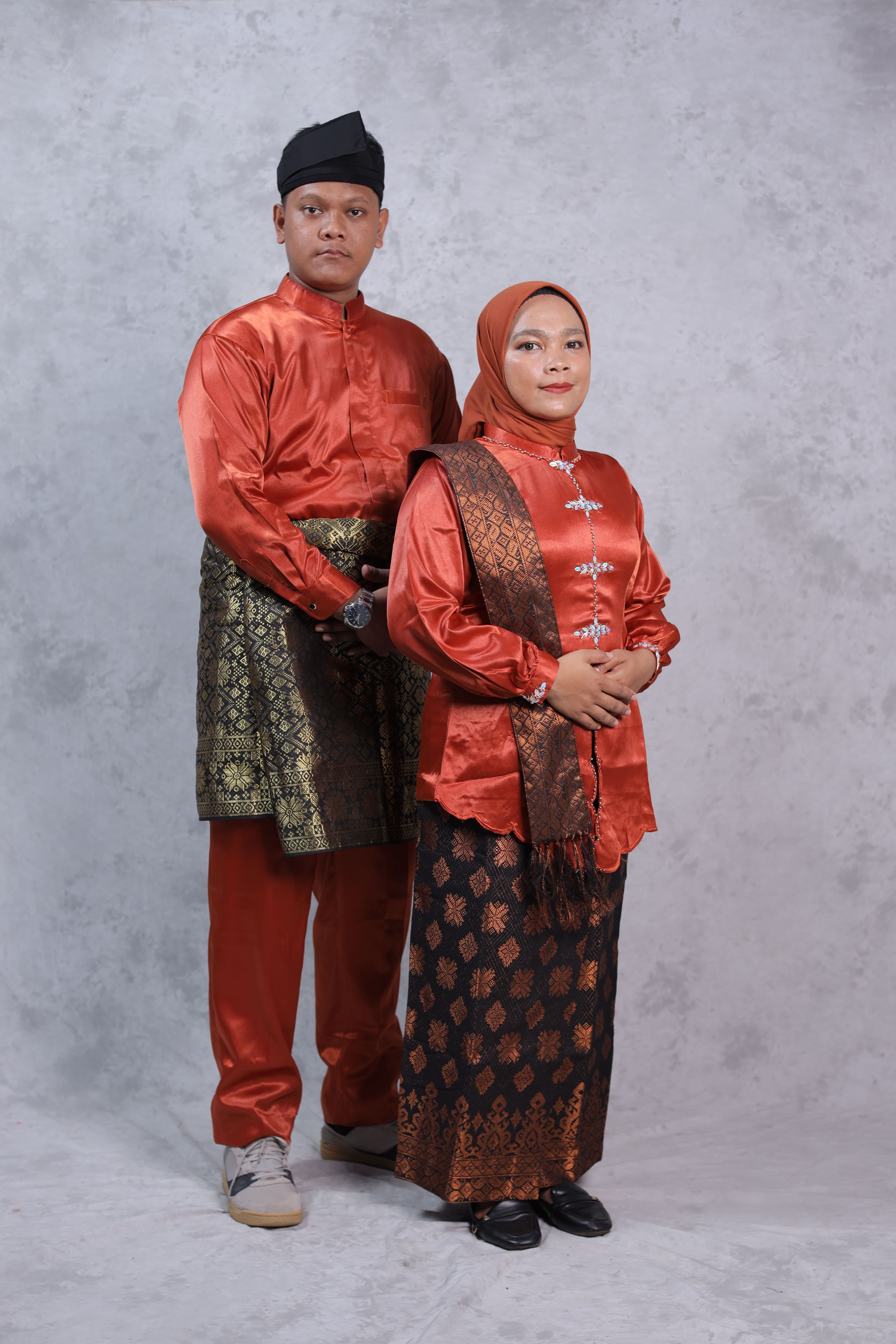
Gold thread is not the kind of material you expect to survive centuries of weddings, monsoons, and royal installations, yet songket has done exactly that. This handwoven Malay fabric, shot through with metallic thread, still turns up at almost every formal Malay occasion in the country, from palace ceremonies to your cousin's akad nikah. It looks purely decorative, but the weave carries actual history in it.
Most Malaysians can spot songket instantly and know almost nothing about how it is made or why. Here are six things about the fabric worth knowing, verified against Malaysia's own heritage authorities and UNESCO's own records.
1. The name comes from a picking technique, not a place
Songket takes its name from the Malay word sungkit, meaning "to pick" or "to hook." That is a literal description of how it is made: a weaver picks gold or silver metallic thread and inserts it between the weft and warp of a base cloth, one small section at a time, according to Jabatan Warisan Negara, Malaysia's National Heritage Department.
The loom itself is called a kek, a traditional Malay floor loom operated with foot pedals. The metallic thread functions as a supplementary weft, meaning it sits on top of the base weave purely to create pattern rather than to hold the cloth together. That is why songket motifs sit slightly raised off the surface if you run a finger across them.
2. It used to be a fabric only royalty could wear
Songket was not always something anyone could buy off a shelf. Historically, only rulers, royal family members, and the country's dignitaries were permitted to wear it, according to Jabatan Warisan Negara's own account of the craft. The gold thread was a visible marker of rank, wealth, and influence, which meant the cloth itself functioned almost like a uniform of status.
That exclusivity has faded. Songket today shows up at weddings, festive gatherings, and official functions across every level of Malay society, though the more elaborate, fully hand-loomed pieces still carry a price and a prestige that mass-market batik does not. A groom's songket sampin or a bride's songket shawl still signals that a family put real thought, and real money, into the day.
3. The patterns are basically a coded vocabulary
Songket motifs are not random decoration. The most recognisable is pucuk rebung, a triangular bamboo-shoot motif that typically runs along the head panel or border of a cloth. Nested inside it are smaller named motifs such as bunga tiga dara (three maidens flower), bunga cengkih (clove flower), tampuk manggis (mangosteen calyx), and bunga bintang (star flower), according to Jabatan Warisan Negara's motif documentation.
Weavers draw these patterns from nature, geometry, and, per UNESCO's own description of the craft, "elements of nature such as flowers, birds and insects." A finished songket is effectively a visual vocabulary passed down through generations of weavers rather than a single decorative idea. Two weavers working from the same named motif can still produce noticeably different cloths, since spacing, thread colour, and base fabric all shift the final read of the pattern.
4. Kelantan and Terengganu lead, but the trade is wider than that
Kampung Penambang in Kota Bharu, Kelantan, is one of the country's best-known songket weaving villages, where local weavers still produce genuine handmade cloth. Terengganu is the other major centre. But songket production in Malaysia also runs through Pahang, Johor, Melaka, and Sarawak, per Jabatan Warisan Negara's inventory of the craft.
That last one is easy to miss. Sarawak's songket tradition sits alongside its own set of Dayak textile and craft practices, a reminder that Malay heritage crafts and Sabah and Sarawak's own Kaamatan and Gawai Dayak traditions often overlap on the same map without competing for space.
5. A single piece can take weeks or months to finish
This is not a fabric you knock out over a weekend. A songket sampin, the smaller waist cloth worn by men, can take around ten days to complete by hand, according to weavers documented at Kampung Penambang. A full traditional songket sarong takes considerably longer: roughly two to three months of continuous, painstaking work, according to research published through the Textile Society of America.
Every metallic thread is inserted by hand, row by row, which is why a genuine handwoven piece commands a price that machine-made imitations simply cannot match. It also explains why songket weaving has always been a slow, patient craft rather than a production-line one.
6. It earned UNESCO recognition in 2021, right as the weavers were ageing out
Songket was inscribed on UNESCO's Representative List of the Intangible Cultural Heritage of Humanity on 15/12/2021, a formal recognition of the weaving technique, its history, and its cultural role. Malaysia's embassies have since used the listing to showcase the craft abroad, including a Songket Malaysia Day Reception in Washington DC in October 2024 that featured historic songket pieces from the National Textiles Museum of Malaysia, some dating back to the 1800s.
The recognition arrives at a tense moment for the trade, though. The craft depends on a shrinking pool of skilled weavers, and authentic handwoven pieces increasingly compete against cheaper machine-made imitations flooding in from overseas. Organisations such as Yayasan Tuanku Nur Zahirah have responded by training new weavers and developing contemporary songket products aimed at keeping the skill economically viable rather than letting it survive only in museum cases.
It is a familiar tension for Malaysian craft heritage generally. Kelantan's kite-making tradition, wau bulan, faces a similar squeeze between ceremonial pride and shrinking numbers of people who still know how to make the real thing by hand.
FAQ
What does the word "songket" actually mean?
It comes from the Malay word sungkit, meaning "to pick" or "to hook," describing how weavers insert gold or silver thread between the base threads of the cloth by hand.
Can anyone wear songket today, or is it still restricted?
Songket was historically reserved for royalty and nobility, but it is now worn across Malay society, most commonly at weddings, festive occasions, and formal ceremonies. It has also been adapted into bags, shoes, and home decor items.
How long does it take to weave one piece of songket?
It varies by size and complexity. A smaller waist cloth known as a sampin can take around ten days, while a full traditional sarong can take two to three months of continuous hand-weaving.
Is songket unique to Malaysia?
No. Songket is woven across the wider Malay world, including Indonesia, Brunei, Thailand, and the Philippines. Malaysia's specific songket weaving tradition was inscribed on UNESCO's Representative List of the Intangible Cultural Heritage of Humanity in December 2021.
Where can genuine handwoven songket be seen or bought?
Kelantan's Kampung Penambang and weaving centres in Terengganu are known for producing authentic handwoven pieces, and the National Textiles Museum of Malaysia in Kuala Lumpur holds historic examples for public viewing. When shopping for a real piece, it helps to ask directly whether the gold pattern was hand-inserted or machine-printed, since the two can look similar from a distance but differ enormously in price and durability.


