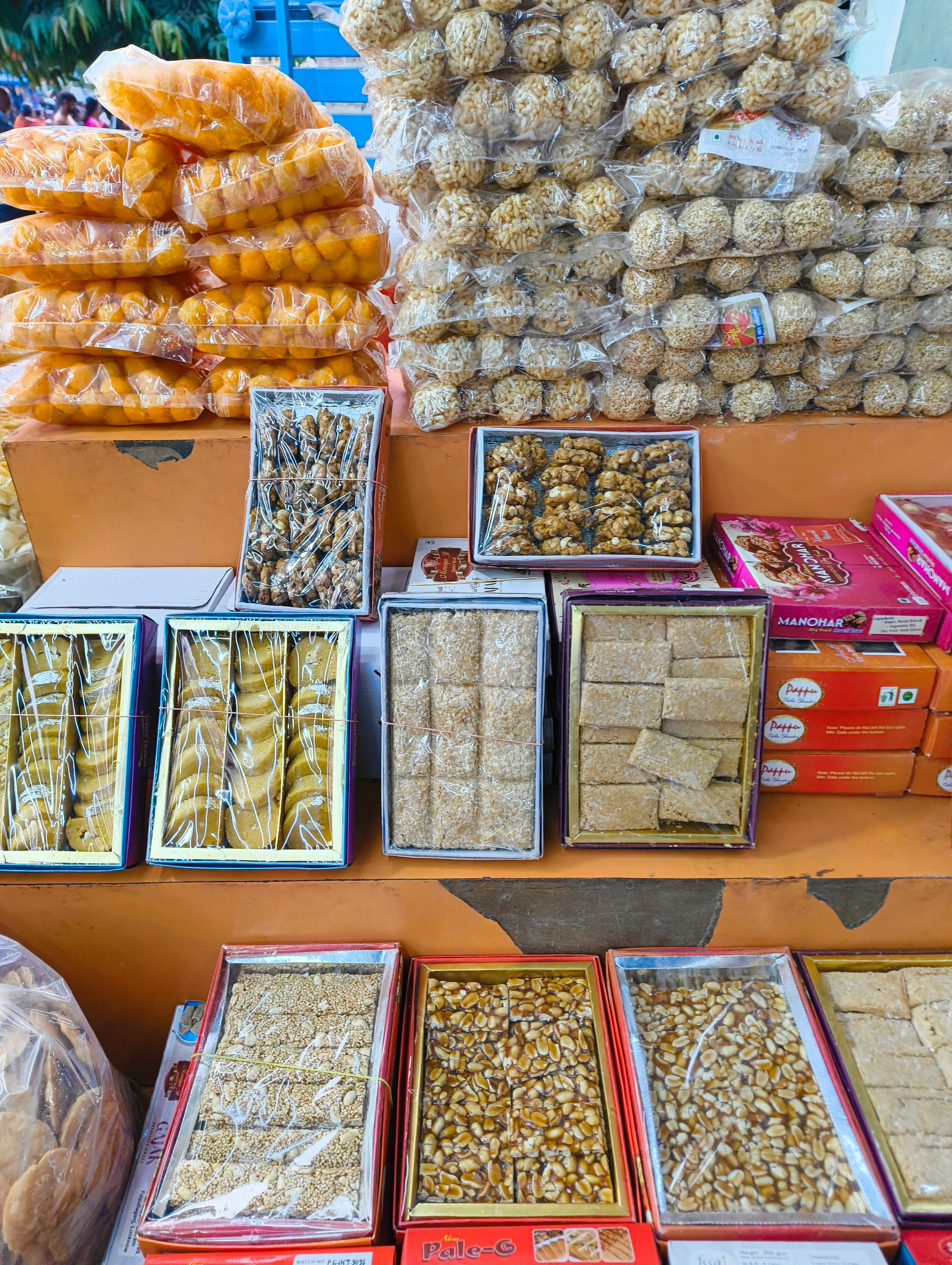
Ask a Malaysian where the pasar malam is and you will get a question back: which night? That answer is the whole system in one word. A pasar malam is not a fixed address the way a shopping mall is. It is a licensed slot in time — a street that is a street for six days and a market for one — and once you understand that, everything else about how night markets behave starts making sense.
Most guides to Malaysian night markets are lists of stalls. Useful, but they skip the part that actually helps you shop: the market has a structure, the traders have a route, and the good stuff sells out on a schedule.
A pasar malam is a rotation, not a place
The stall selling you apam balik tonight in Taman Tun is very likely the same stall that was in Bangsar on Sunday and will be in Setapak on Wednesday. That is not a coincidence and it is not informal. It is licensed.
Night markets in Kuala Lumpur run under the Licensing and Business Development Department at DBKL, which issues hawker and night-market licences and decides which locations operate on which nights. Crucially, under DBKL's licensing terms a single applicant can hold a licence for up to seven different pasar malam locations — one for each night of the week. One trader, seven addresses, seven nights.
So a pasar malam is best understood as a weekly circuit. The traders are a travelling company. The location is the venue that happens to be booked that evening.
This explains a lot of small mysteries. Why the layout at your local market barely changes month to month. Why a stall that vanishes for a fortnight comes back in exactly the same spot. Why the durian uncle knows your face even though you have only ever been to one market.
It also narrows who is behind the table. DBKL's licensing rules for street traders are tighter than most shoppers assume. Licences are issued to Malaysian citizens, and licensed street traders are not permitted to employ foreign workers at the stall. Food handlers face the additional layer that applies to any F&B operation — food-handling training and typhoid vaccination.
Other councils run their own versions of the same idea, which is why a pasar malam in Shah Alam and one in Cheras feel almost identical in structure while following slightly different rules on hours and stall sizes. The takeaway: a pasar malam stall is a licensed micro-business with a fixed address for one evening a week, not a pop-up.
Go at 5.30pm or go at 9pm — the two markets
Most KL night markets set up from around 4pm to 5pm and wind down between 10pm and 11pm. Within that window there are effectively two different markets.
The early market, roughly 5pm to 7pm, is the produce market. Vegetables are at their best, the fish has not been sitting out, the kuih trays are full, and the fruit sellers have not yet started splitting durians for the crowd. Prices are firm. Nobody is negotiating because nobody needs to.
The late market, from about 9pm, is the clearance market. This is where the vegetable sellers start doing three-for-RM10, the fish gets bundled, and the leftover kuih goes out at a discount rather than home. Selection is thin. Value is excellent.
If you want the good tofu and the whole fish, go early. If you want volume and you are not fussy about which kangkung, go late. The mistake is arriving at 8pm, which is peak crowd and post-peak stock.
What a pasar malam is genuinely better at
Night markets are not automatically cheaper than a hypermarket. On packaged goods they usually are not. Where they win is on a specific set of categories.
Fresh produce with fast turnover. Leafy greens, herbs, chillies, local fruit in season. Bought that morning, sold that evening, gone.
Hot food you eat standing up. Apam balik, roti john, ramly burger, keropok lekor, murtabak, fried chicken, char kuey teow cooked on a portable wok. This is the part people actually come for.
Kuih. A pasar malam kuih tray is a different proposition from a morning market tray — sweeter, more fried items, more coconut. If you have not learned to read a tray yet, our guide to reading a pasar pagi kuih tray transfers almost entirely.
Cheap household consumables. Socks, phone cables, plastic tubs, sponges. Quality is a lottery. Prices are not.
Where a pasar malam is a poor bet: electronics with a warranty, anything needing a receipt for a claim, and skincare you cannot verify under a fluorescent tube.
Cash still wins, but QR has arrived
DuitNow QR has spread through night markets faster than almost anyone predicted. A large share of stalls now have a laminated QR code cable-tied to the frame. Many still prefer cash, and some quietly price accordingly.
Two practical rules. Bring small notes — handing an RM50 to a stall selling RM4 apam balik at 6pm is a good way to be told to come back later. And do not assume every stall takes QR just because the one next to it does; check the frame before you order, not after.
Reading a stall in ten seconds
You do not get to inspect a kitchen at a pasar malam. You get a glance. Here is what is actually worth glancing at.
Turnover before appearance. A stall with a short, moving queue is a better signal than a stall with a spotless display and nobody at it. Food that sits under a heat lamp at a night market sits for hours.
Cooked-to-order versus pre-cooked. Anything fried in front of you is a safer bet than anything already stacked in a tray. This is the single most reliable rule at any night market anywhere.
Ice and raw seafood. If the ice is gone and the fish is warm, walk. Seafood pricing at night markets follows the same murky logic as restaurant menus — worth reading our piece on why "market price" is not really a price.
Gloves and tongs on cash. The stall handling money and food with the same bare hand is telling you something.
Haggling, and what to bring
Malaysians overestimate how much bargaining happens at a pasar malam. On food, essentially none — the price is the price, and asking for a discount on a RM5 murtabak just makes the queue behind you sigh.
Where it exists, it exists in two narrow forms. Bulk on produce, late in the evening, usually offered by the seller before you ask. And on non-food goods like clothing and household items, where a polite "boleh kurang sikit?" on a multi-item purchase is normal and a demand for half price is not.
Buying two of something is a stronger lever than any phrase you can say.
As for what to carry in: a tote bag or two. Small notes. A phone with battery for QR. Closed shoes, because the ground near the fish and fruit sections is not dry. And a decision made in advance about whether you are eating there or bringing food home, because a bag of hot keropok lekor and a bag of fresh chillies do not travel well together.
Go with an appetite and no fixed plan. The best thing at any given pasar malam is usually whatever has a queue when you arrive — which is also, conveniently, the safest thing to eat. If you end up eating your way through it at 10pm and calling it dinner, you are simply participating in Malaysia's fourth meal.
FAQ
What time does a pasar malam usually start and end?
Most night markets in the Klang Valley set up from around 4pm to 5pm and run until roughly 10pm to 11pm. Exact hours vary by location and local council, so check your city or municipal council's listing for the market nearest you.
Why is the pasar malam on a different day in every neighbourhood?
Because the licence is tied to a specific location on a specific night. DBKL allows a trader to hold licences for up to seven night-market locations, one per night, so the same traders rotate through different neighbourhoods across the week.
Is a pasar malam cheaper than a supermarket?
For fast-moving fresh produce and hot cooked food, often yes — especially late in the evening. For packaged goods, branded items and anything you would want a warranty on, usually not.
Can I pay by DuitNow QR at a pasar malam?
Many stalls now accept DuitNow QR, but not all, and some still prefer cash. Bring small notes as a backup and check for a QR code on the stall frame before you order.
How do I find the pasar malam nearest me?
Local councils publish night-market locations and operating days. In Kuala Lumpur, DBKL lists them under its public facilities section; elsewhere, check your own PBT's website or licensing department.
Sources: DBKL — Pasar Malam, DBKL — Licensing and Business Development Department, DBKL — Business Licence Guidelines