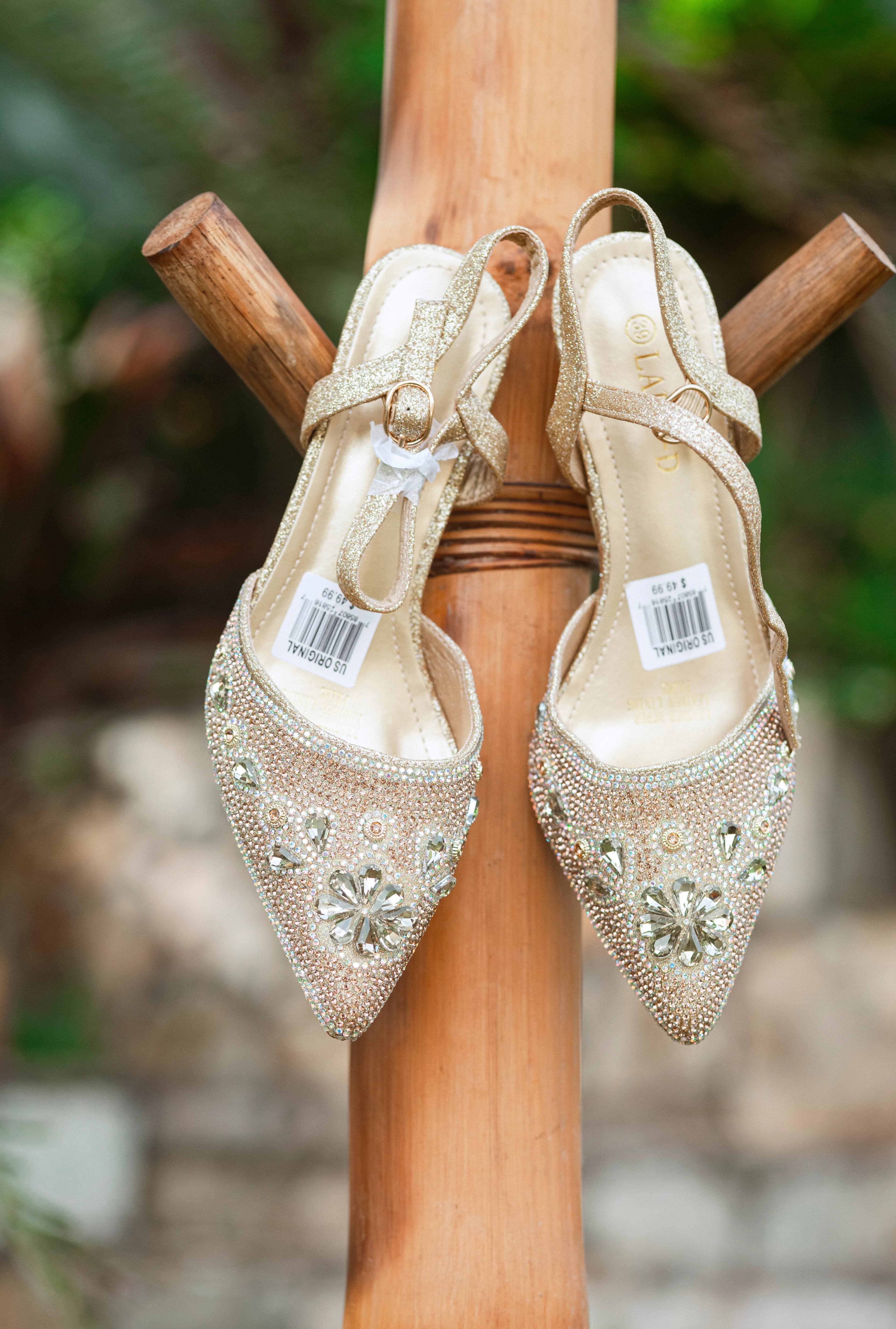
A pair of kasut manik can take about a month to make, and the beading alone is the slow part. These hand-beaded shoes belong to the Peranakan community, and they are one of the few pieces of Malaysian fashion where the maker, the pattern and the wait all matter as much as the shoe.
If you have only seen them in a glass case or on a bride, this guide explains what you are actually looking at. It covers history, materials, time, price and where the craft stands today.
What Kasut Manik Actually Is
Kasut manik (beaded shoes) are shoes decorated with tiny beads, worked into patterns by hand. They are tied to the Baba Nyonya, the Peranakan community that grew from Chinese merchants who arrived in the Malay Archipelago in the 15th and 16th centuries and intermarried with local people. According to an academic paper on Baba Nyonya beaded shoes, the community is centred mainly in Melaka and Penang.
For the wider story of the community itself, see our explainer on why Baba Nyonya became an official category, and our earlier story behind the recognition.
7 Things Worth Knowing About Kasut Manik
1. They were a status symbol and a signal
Beaded shoes were traditionally worn on formal occasions such as weddings. A BASKL profile of Penang's next generation of makers says they were status symbols and indicators of a woman's marriageability.
2. The original shape is the kasut kodok
The earliest style is the kasut kodok, with a flat sole and an upturned toe. BASKL notes that modern makers now offer heels, mules and open-toe designs as well. If a shop calls something kasut manik, check whether it is a traditional flat or a modern reinterpretation. Both are legitimate, but they are different products.
3. The beads came from abroad
Historically, the shoes were beaded with tiny European glass beads known as manek potong, worked with Peking knot embroidery, according to BASKL. Today, some Penang makers say they source beads imported from Japan for quality and durability. The academic paper agrees that beads were traditionally imported, because the quality was better and longer lasting, and mentions that pearls and crystals are used in some modern designs.
4. It is weeks of work, not days
BASKL reports roughly three to four weeks to complete the beaded face (the muka), and about a month to finish a pair. The academic paper describes a five-stage process:
- Preparing the frame and sketching the design
- Sewing the decorative borders
- Attaching the beads inside the pattern
- Preparing the leather base
- Patching the beaded piece onto the shoe
It puts the total at anywhere from three weeks to 52 weeks depending on complexity and materials. That is a wide range, so ask any maker for a real timeline before you pay a deposit.
5. Designs are nature, and many are one-offs
The study lists floral motifs such as roses and other flowers, and animal motifs including birds, lions, dragons and chickens. It also notes that each design is made only once or twice, which keeps the work exclusive. Treat that as an observation from one study, not a rule every maker follows.
6. They are priced like couture
BASKL puts the average at about RM2,000 per pair. At a month of work per pair, a large part of that price is labour. The figure comes from one feature and will vary by maker, beadwork and timing, so treat it as a ballpark and ask for a quote.
The same feature names three Penang makers:
- Patricia Choo Collection, run by Jocelyn and Joel Teh
- Kenny Loh Couture, led by Baba Kenny and with an online store
- SMODE Collections, run by Tan Kok Oo from a traditional shophouse in George Town
Confirm current details directly with any maker, since contact information and availability change.
7. The craft is being repurposed
In August 2022, Malaysia Aviation Group launched a limited-edition pair with Kenny Loh, reported by Marketing-Interactive. Each pair carried 2,000 hand-applied beads on upcycled material from the airline's batik kebaya, on a two-inch block heel. The colours were Penang green, Singapore red and Melaka blue.
That is not a heritage-museum approach. It is a useful example of how makers are pulling kasut manik into modern wardrobes without dropping the technique.
Where the Craft Stands Today
A craft this slow has an obvious weakness: it needs people willing to spend years learning before the work looks like anything. That is why the makers below matter.
Kasut manik survives because a small number of people keep doing slow work. The academic paper highlights Madam May Lim Siew Seng, who has more than 40 years of experience and runs workshops and apprenticeships. BASKL's profile covers a younger group, including a 24-year-old at Patricia Choo Collection at the time of writing.
It also records a familiar problem. Baba Kenny says beginners often quit early, because the design is hard to see until a good part of the beading is done.
If you are thinking of buying a pair, a few questions are fair to ask:
- Who did the beading, and how many weeks did it take?
- Which beads are used, and where do they come from?
- Is it a traditional flat shape or a modern heel?
- What is the deposit and delivery timeline?
For other Malaysian craft stories with a similar slow pace, our piece on songket is a good companion.
FAQ
What does kasut manik mean?
Kasut is Malay for shoe and manik for bead. Together they describe shoes decorated with hand-sewn beads, associated with Baba Nyonya culture.
What is a kasut kodok?
It is the traditional style with a flat sole and an upturned toe. Modern makers have added heels, mules and open-toe versions.
How long does it take to make a pair of kasut manik?
One Penang feature reports about a month, with three to four weeks for the beaded face alone. A study of the craft gives a wider range, from three to 52 weeks depending on the complexity of the work.
How much do beaded shoes cost in Malaysia?
BASKL's profile reports an average of about RM2,000 per pair. Prices differ by maker, bead quality and design, so ask for a quote before ordering.
Can anyone wear kasut manik?
Traditionally they were worn on formal occasions like weddings. Today, designers show them with heels and modern outfits. The sources we found describe formal-occasion use and set no rules on who may wear them.


