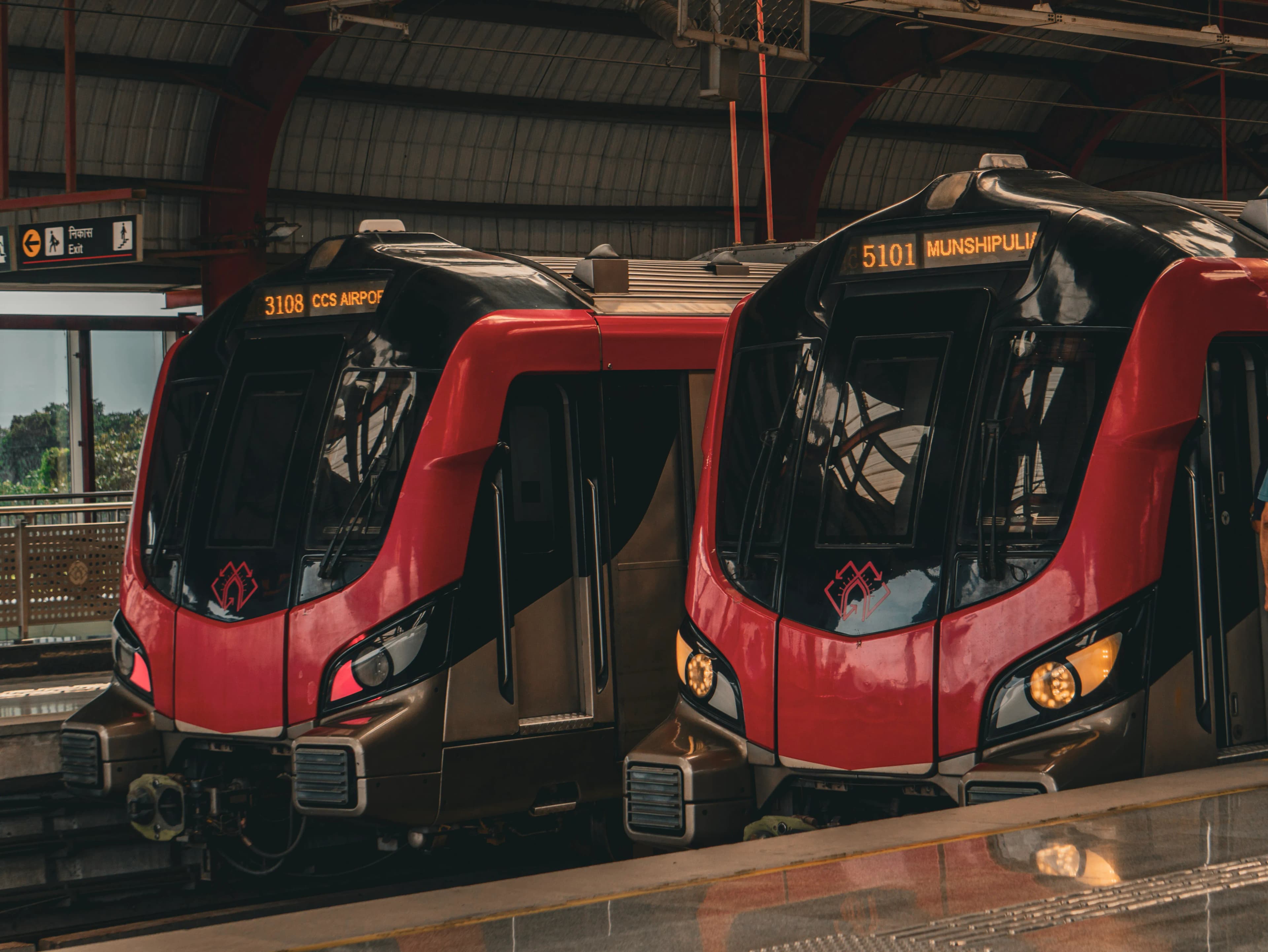
Anyone who has queued at the Woodlands or Bukit Chagar checkpoint on a Friday evening knows the JB-Singapore crossing has needed help for years. The Rapid Transit System (RTS) Link, the long-awaited cross-border train connecting Johor Bahru's Bukit Chagar to Singapore's Woodlands North, has now moved past construction and into the testing phase that comes right before a launch date starts to mean something.
That shift matters for anyone planning a Singapore weekend run, a JB shopping trip, or a longer regional hop later this year. The RTS Link is no longer an abstract "coming soon" line item - it now has trains running test laps, a rough fare range on the table, and a transport minister fielding pointed questions in Parliament.
Where the project actually stands
Transport Minister Anthony Loke told reporters in January 2026 that most of the RTS Link's physical infrastructure is complete, with the project now focused on installing rail systems ahead of extensive testing. Trains were already running test laps on the Johor Baru tracks at that point, he said.
By April, Loke confirmed ticketing details were still being finalised as the project entered its "critical testing and commissioning phase" - a normal stage for a cross-border rail system built jointly by two governments and two rail operators.
The current target: construction completed by December 2026, with passenger operations beginning in January 2027. Loke has also flagged that a new parliamentary bill allowing joint, co-located border controls must pass before the RTS Link can open - Singaporean officers stationed at Bukit Chagar, Malaysian officers at Woodlands North, under one roof.
The immigration upgrade is the real story
Ask any regular Causeway commuter what ruins the trip, and it is rarely the ride - it is the immigration queue. The RTS Link's biggest change might be a co-located Customs, Immigration and Quarantine complex at Bukit Chagar, where travellers clear both countries' checks in one pass via QR-code passport scanning, instead of doing it twice.
The setup is described as roughly 100 AI-assisted e-gates, each designed to process a traveller in about seven seconds, alongside dedicated screening lanes and baggage scanners - the difference between a five-minute ride bookended by a forty-minute queue, and something closer to an ordinary train.
What it will actually cost
Fares are still officially unconfirmed, but Loke has pointed to an estimated range of S$5 to S$7 per trip, or roughly RM15.50 to RM21.70, citing figures first reported by Sin Chew Daily and picked up by paultan.org. The final fare structure is expected to be gazetted only closer to launch.
That is pricier than the KTM Shuttle Tebrau, the decades-old train the RTS Link is set to retire, which runs at around RM5 one-way. Loke's counter-argument is driving costs: Singapore's Vehicle Entry Permit fee for cars rises to S$50 a day from January 2027, on top of existing tolls. For a solo traveller without a car, the train should still work out cheaper and faster during peak hours.
Ticketing is expected to lean on QR codes and contactless payment rather than a new dedicated card, in line with how most Malaysians already tap in and out of transit - worth a check of what's already in your e-wallet apps before the launch window opens.
Planning around a launch date that keeps shifting
One lesson from following this project: "end of 2026" has meant different things at different points - sometimes a construction deadline, sometimes the start of passenger service. Build in a buffer rather than locking travel plans around it.
For now, keep the options open. Flying remains the faster call for a Singapore weekend, a reminder that Malaysia's expanding regional flight options have not disappeared just because a rail alternative is coming. And if a JB or Singapore run is already on the cards, it is worth mapping it against the second half of 2026's long weekends - the RTS Link will not be running yet, but the Causeway crowds during those stretches certainly will be.
The Ministry of Transport in Singapore has confirmed eight trains, each carrying more than 600 passengers, will run the line at launch, with capacity for up to 10,000 passengers per hour each direction - the scale this project is built for, a real alternative to one of the region's busiest land borders.
FAQ
When will the RTS Link actually open?
The government target is construction completed by December 2026, with passenger service beginning January 2027, though a parliamentary bill on joint border controls still needs to pass first.
How much will a ticket cost?
Estimates point to S$5 to S$7 (roughly RM15.50-RM21.70) one-way, though the official fare structure is expected to be confirmed only later in 2026.
Will there still be a long immigration queue?
Travellers should only need to queue once. The co-located complex at Bukit Chagar is designed to let commuters clear both Malaysian and Singaporean checks in a single pass through roughly 100 AI-assisted e-gates.
Does this replace the KTM Shuttle Tebrau train?
Yes, eventually. The RTS Link is expected to retire the older shuttle train once fully operational, though an exact cutover date has not been locked in publicly.
Where does the RTS Link actually run between?
It connects Bukit Chagar station in Johor Bahru with Woodlands North station in Singapore, a roughly 4km line built for a journey of about five to six minutes.