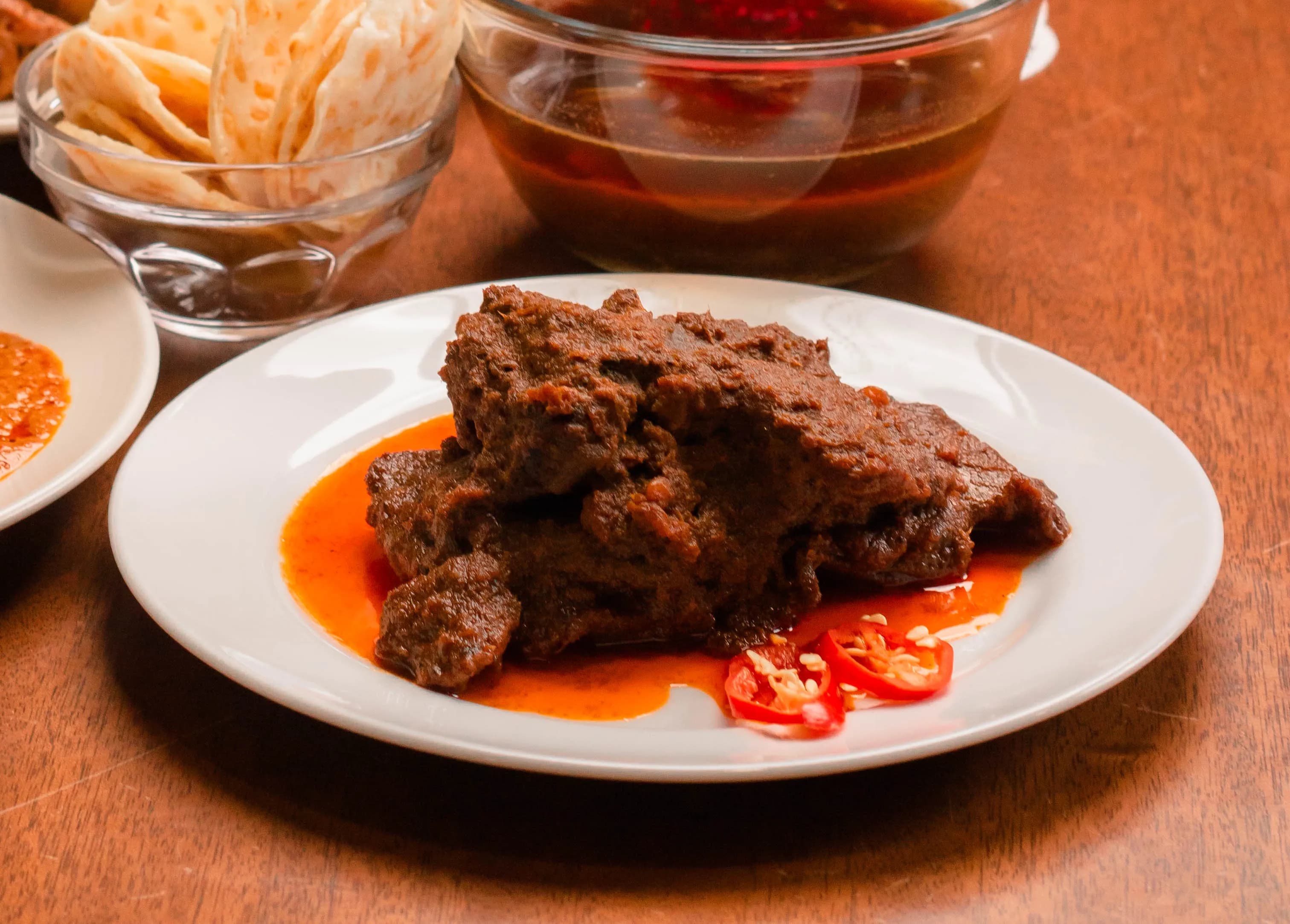
Rendang is not one dish. In Malaysia it is a cooking stage that cooks stop at on different days, in different states, for different reasons. The same word covers a saucy beef rendang at a kenduri (feast), a bone-dry rendang tok from Perak, and a Sarawak version cooked with no coconut milk at all.
That is why two people can argue about "real" rendang and both be right. Here is how to read the spectrum, so you know what you are looking at the next time a plate lands on your table.
What Makes a Rendang a Rendang
Rendang is meat slow-cooked in coconut milk and a spice paste. The defining step, according to Wikipedia's rendang entry, is cooking it long enough for the oil to separate. Dishes like gulai and kalio keep more liquid.
Think of it as three stations on one road.
- Gulai: soupy, closer to a curry.
- Kalio: thick and saucy, the in-between stage.
- Rendang: the liquid cooks off, the oil separates and the meat turns dark and glossy.
Plenty of Malaysian rendang stops somewhere between kalio and rendang, and does not apologise for it.
Then there is kerisik (toasted grated coconut). Many Malaysian recipes use it to thicken the sauce quickly and add a nutty, almost smoky depth. It is the grainy texture you sometimes feel in the gravy.
The roots are shared. Rendang sits in both Malay and Minangkabau cooking, which grew up around the Malacca Strait. Wikipedia also notes that Malaysia recognised rendang as a National Heritage food in 2009.
Wet, Dry or In Between: Reading the Plate
You can estimate how long a rendang was cooked before you take a bite.
Lighter and glossy with visible gravy. Shorter cook. Seasia's comparison describes Malaysian rendang as juicier and lighter in colour, with a sheen from coconut oil separating out of the gravy.
Dark brown, crusted, hardly any sauce. Longer cook. The same comparison says the Indonesian style can simmer for hours, up to five, until the coconut milk evaporates and the meat turns dark brown or almost black.
Neither is a mistake. The wetter style suits rice, because the gravy does the work. The drier style carries its flavour in the meat, so it is eaten in smaller bites.
If you are building a plate around nasi lemak, our nasi lemak guide covers the sambal side of the argument.
Rendang Across Malaysia: The State-by-State Cheat Sheet
The beef rendang most people picture is only one branch. A Mix.my roundup lists variations from across the country, and Wikipedia adds a few more.
| Rendang | Where | What sets it apart |
|---|---|---|
| Rendang tok | Perak | Originally made with buffalo, said to give a chewy texture and sweet taste. Beef is common now. Wood-fire cooking is part of the tradition. |
| Dendeng rendang | Perak | Beef slices are pounded before cooking. |
| Rendang cili padi | Negeri Sembilan | Uses bird's eye chilli instead of dried chilli. Fiery. |
| Rendang maman | Negeri Sembilan | Cooked with maman, a leafy vegetable, plus tamarind and fresh turmeric. |
| Rendang kuning / hitam | Negeri Sembilan | Cooked until completely dry, according to Wikipedia. |
| Rendang opor | Pahang | Belacan, tamarind juice, opor spices, lemongrass and ginger. Time-intensive. |
| Rendang hati | Johor | Made with beef liver and soy sauce. The liver must not be overcooked. |
| Rendang ayam | Kelantan | Skips the toasted coconut and uses asam gelugor slices for a more gravy-like texture. |
| Rendang ayam lengkuas | Sabah | A Bugis recipe, heavy on galangal. Dry and wet versions both exist. |
| Rendang daging hitam | Sarawak | Cooked without coconut milk, yet still rich and savoury. A staple at festive gatherings. |
One more name to know is kerutuk. Wikipedia describes it as a Terengganu and Kelantan dish of meat mixed with spices that is said to resemble rendang.
Notice what changes. The meat swaps between beef, buffalo, chicken and liver. The coconut comes and goes. The chilli, the souring agent and the aromatics shift by state. The only constant is the idea of cooking something slowly until it concentrates.
Menus rarely say which stage they mean. A signboard that just says "rendang" can be anything from a saucy kalio-style dish to something bone-dry. Names that carry a place or an ingredient, such as tok, cili padi or hitam, usually point to a specific recipe, so those are worth asking about. The more specific the name, the more likely the cook is following a tradition rather than improvising.
It also explains why a rendang you loved in one state can disappoint in another. You may simply be comparing different dishes under one word.
Malaysian vs Minang Rendang: What Actually Differs
Rendang travels with a lot of national pride, so it helps to keep the description plain.
Both traditions trace to Minangkabau culture in West Sumatra. According to Seasia, the Malaysian versions evolved through migration and local adaptation between the 16th and 19th centuries.
The practical differences it lists:
- Cooking time: Malaysian rendang is cooked for a shorter period than the Indonesian style.
- Texture: Malaysian rendang is juicier, closer to a gravy.
- Thickening: kerisik does much of the thickening work in Malaysian kitchens.
- Flavour: Malaysian rendang is described as more aromatic and herbal, sometimes slightly sweet, with Indian-Malay spices such as cloves and cinnamon.
CNN's readers' poll put rendang at number one among the world's most delicious foods in 2011, and Wikipedia notes the result set off debates about culinary ownership. We are not picking a side. The two kitchens share a family tree and have diverged since.
How to Order and Judge Rendang
You do not need to know the state to order well. You need three questions.
- Is it dry or saucy? Ask before you commit. If you want something to spoon over rice, point at the saucy tray.
- What is the meat? Beef, buffalo, chicken and liver all take the paste differently. Liver, for one, must not be overcooked.
- Is it spicy? A rendang cili padi will not behave like a mild, sweet one.
Then judge it.
- Oil separation. A thin sheen of coconut oil is a good sign of a rendang that was cooked down, not just simmered.
- Meat texture. It should break apart easily, not squeak.
- Kerisik. A fine grain in the gravy means the coconut was toasted and ground in. A flat coconut note can mean the step was skipped.
- Balance. Chilli, tamarind or asam gelugor, lemongrass and galangal should all be audible. None should shout.
If you like dishes that change by region, our satay guide, with its Kajang versus KL debate, is a good next stop.
Finally, give it a minute. Rendang is a dish built on concentration, and the flavour often opens up after a few spoonfuls once the spice, coconut and meat settle together. Do not judge it on the first bite alone.
FAQ
Is rendang supposed to be dry or wet?
Both exist. By the strict definition, rendang is cooked until the liquid has gone and the oil separates. Wetter versions sit closer to kalio. In Malaysia, the saucy middle ground is common and widely accepted.
What is the difference between rendang and kalio?
Kalio keeps more liquid and a thicker sauce. Rendang is cooked further, until the oil separates and the meat darkens. They are two points on the same road.
What is rendang tok?
It is a rendang from Perak, linked to Bukit Chandan according to Wikipedia. It is dry, made with cubed meat, coconut milk and a spice blend, and finished with toasted coconut. It was traditionally made with buffalo.
What is kerisik and do all rendangs use it?
Kerisik is toasted grated coconut, ground until it releases its oil. Many Malaysian rendangs use it, but not all. The Kelantan chicken rendang skips it and uses asam gelugor instead.
Is rendang Malaysian or Indonesian?
Both traditions trace to Minangkabau cooking and have developed their own styles since. The honest answer is that it is a shared inheritance, cooked differently on each side of the Malacca Strait.


