Hand, foot and mouth disease is doing what it does every few months in Malaysia: moving through childcare centres and kindergartens faster than the notices sent home in school bags. Outbreak.MY, an independent tracker that draws on Ministry of Health (KKM, Kementerian Kesihatan Malaysia) and data.gov.my data, currently flags HFMD as a "moderate" nationwide alert, with an estimated 12,500-plus cases so far in 2026 as of late July, describing an ongoing seasonal pattern tied to childcare centres and schools.
That is an estimate from an independent monitor, not a confirmed KKM tally, and no fresh 2026 case count has been formally published by KKM as of writing. But the underlying pattern is real and well documented, and it is worth understanding before this term's clusters grow.
How Bad Is the HFMD Situation in Malaysia Right Now?
The clearest recent official benchmark comes from 2025, when KKM confirmed 99,601 HFMD cases nationwide by Epidemiological Week 17 (ending 26 April), a 266 percent jump from 27,236 cases in the same period of 2024. Selangor recorded the most cases (27,118, or 27.2 percent), followed by Johor (9,864), Perak (9,347), Kelantan (7,147), and Kuala Lumpur/Putrajaya (6,850).
Of 2,649 outbreaks logged that year, most were traced to taska (childcare centres, 22 percent), tadika (kindergartens, 18 percent), tabika (nurseries, 11 percent) and preschools (9 percent). KKM inspected over 38,000 premises and ordered 1,140 closed under the Prevention and Control of Infectious Diseases Act 1988. No HFMD deaths were reported that period.
Outbreak.MY's current data suggests 2026 has not yet matched that scale, but it is tracking the same states and institutions — which is why the pattern matters more than any single number.
Why HFMD Keeps Coming Back Every School Term
HFMD is caused by a group of enteroviruses, mainly Coxsackievirus A6 and Enterovirus 71 (EV71), both of which are currently circulating in Malaysia according to outbreak.my. It spreads through saliva, blister fluid, respiratory droplets and contaminated surfaces — exactly the conditions of a shared classroom, playroom or bathroom.
Children under five are most vulnerable, and they can shed the virus before symptoms appear, which is why clusters move quickly through a centre before anyone realises. This is also why school-term spikes are a recurring feature rather than a one-off event: every fresh intake of toddlers into childcare resets the exposure cycle.
Symptoms Parents Should Watch For
HFMD typically starts with fever, reduced appetite and a sore throat, followed within a day or two by mouth ulcers and a rash or fluid-filled blisters on the palms, soles and sometimes the buttocks. Most children recover within 7 to 10 days without needing hospital care.
When to Keep Your Child Home
KKM's guidance to parents has been consistent across recent outbreak statements: children showing symptoms should get medical attention promptly and stay away from childcare centres and crowded public places until they have recovered. Personal items such as cups, towels and toothbrushes should never be shared, at home or in class.
As a practical rule, most klinik kesihatan (government health clinics) and paediatricians advise keeping a child home until the fever has settled and blisters have dried or crusted over — but confirm timing with your own doctor rather than guessing, since recovery pace varies. If you need to arrange a visit, you can book a klinik kesihatan appointment through MySejahtera instead of walking in and waiting.
When to See a Doctor
Most HFMD cases are mild and self-limiting, and there is no need to panic over a rash. Still, EV71 infections are the strain most associated with rare but serious complications, so it is worth knowing the warning signs rather than guessing at home.
Seek medical attention promptly if your child has a persistent high fever, appears unusually drowsy, has a seizure, struggles to breathe, or shows signs of dehydration such as not urinating for hours. This article is not a substitute for medical advice — a doctor or klinik kesihatan should make the call on diagnosis and treatment.
Prevention That Actually Works
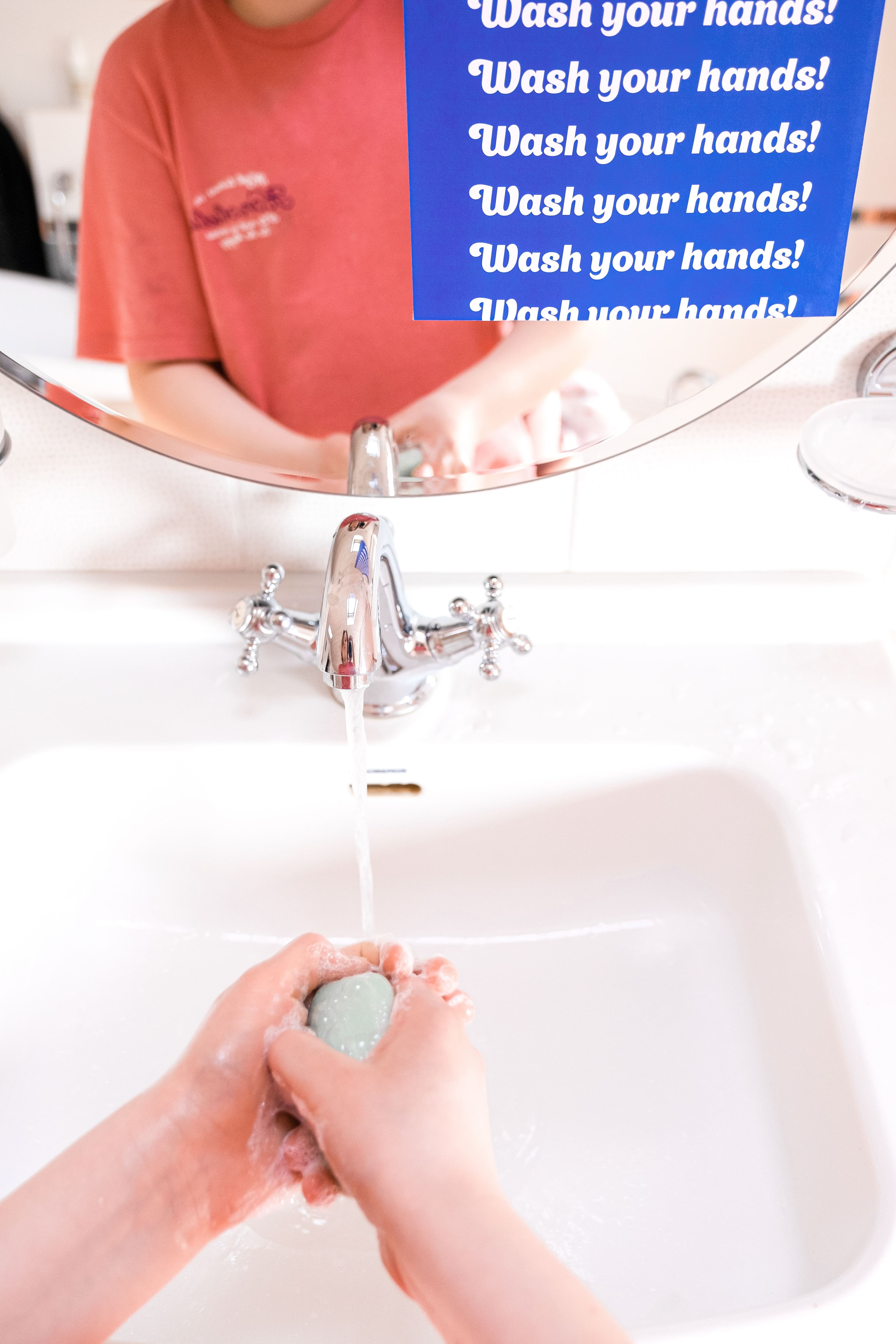
KKM's advice for households and childcare centres has not changed much because it works: frequent handwashing with soap, regular disinfection of toys, doorknobs and bathroom surfaces, and no sharing of cups, towels or utensils. For centres, that means daily symptom checks at drop-off, prompt isolation of any child showing signs, quick communication with parents, and more frequent cleaning during active clusters.
None of this requires special equipment — just consistency, especially as more children return to shared classrooms this term.
FAQ
Is HFMD in Malaysia caused by one specific virus?
No. It is caused by a group of enteroviruses, most commonly Coxsackievirus A6 and A16, and EV71, which is the strain linked to more severe cases. Different viruses can circulate in different years.
How long is a child with HFMD contagious?
Children can spread the virus even before symptoms appear, and shedding can continue for some time after recovery. This is why KKM recommends keeping symptomatic children away from childcare and public places until a doctor confirms they are no longer infectious.
Can adults catch HFMD from their children?
Yes, though it is less common. Adults can be infected, sometimes with more noticeable symptoms, so household hygiene matters for the whole family, not just the child.
Is there a vaccine or specific medicine for HFMD?
There is no specific antiviral treatment routinely used for HFMD in Malaysia's public healthcare system. Management focuses on comfort and hydration, with a doctor guiding care and watching for complications.
My child's centre reported a case but my child isn't sick. What should I do?
Monitor for symptoms and follow your centre's health protocols. KKM's general guidance is that only symptomatic children need to stay home; asymptomatic children can usually continue attending unless your local Pejabat Kesihatan Daerah (District Health Office) or the centre advises otherwise.
Sources: Outbreak.MY, Free Malaysia Today — 266% spike in HFMD cases reported nationwide, Ministry of Health Malaysia — HFMD information page


